
Бесплатный фрагмент - Английский язык для продолжающих
От уровня B1 к уверенной коммуникации на B2
Предисловие
Дорогие читатели!
Данная книга предназначена для систематической работы над английской грамматикой и развитием уверенности в речи на уровне от B1+ до B2. Она построена как последовательный учебный курс, состоящий из десяти модулей, каждый из которых фокусируется на конкретных аспектах языка и обеспечивает постепенное усложнение материала.
Цель книги — не только закрепить знания о грамматических конструкциях, но и научить применять их в реальных коммуникативных ситуациях. В первых модулях особое внимание уделяется повторению и уточнению базовых времен и форм, что создаёт прочный фундамент для дальнейшего изучения. Последующие модули расширяют знания о временах, модальных глаголах, условных предложениях, пассивном залоге, косвенной речи, сложных предложениях, герундиях и инфинитивах.
Особое внимание уделено практическому применению грамматики в повседневной речи, деловой и формальной коммуникации, а также навыкам передачи мыслей, выражения мнений и построения связных текстов. Каждый модуль включает структурированный материал, упражнения и обзор ключевых тем, что позволяет постепенно развивать уверенность и точность использования английского языка.
Я надеюсь, что эта книга станет удобным и надёжным инструментом для самостоятельного изучения, а также эффективным пособием для преподавателей, которые стремятся систематизировать обучение своих студентов.
Present Simple vs Present Continuous in Real Life
Grammar Focus
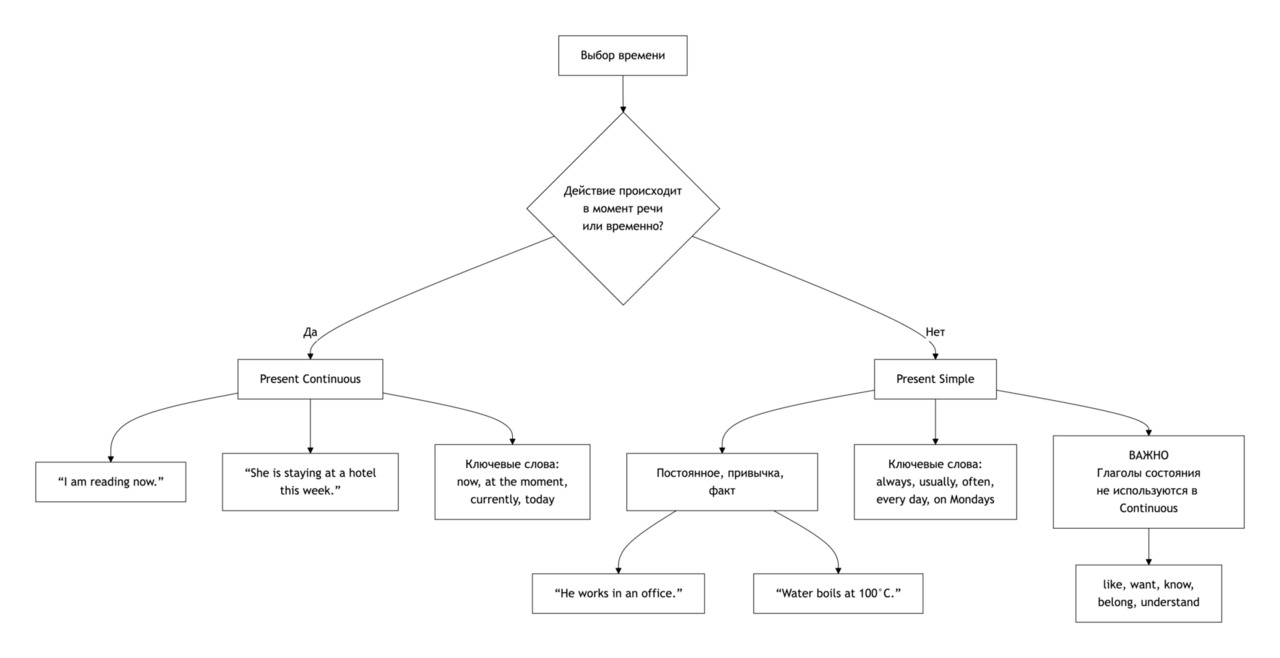
Present Simple используется для:
регулярных действий и привычек;
фактов и постоянных ситуаций;
расписаний и общеизвестных истин.
Формула:
Subject + base verb (s/es для he/she/it)
Examples:
I work in an international company. — Я работаю в международной компании.
She usually starts work at nine. — Она обычно начинает работу в девять.
Present Continuous используется для:
действий, происходящих в момент речи;
временных ситуаций;
изменений и процессов.
Формула:
Subject + am/is/are + verb + -ing
Examples:
I am working from home this week. — Я работаю из дома на этой неделе.
They are discussing a new project now. — Они сейчас обсуждают новый проект.
Story
Michael works as a project manager in a small IT company. He usually starts his day early and checks his emails before breakfast. His job requires attention to details, and he often plans his tasks for the whole week.
This month, however, things are a bit different. Michael is working on a new international project, and the team is growing quickly. Right now, he is learning how to manage people from different countries and cultures. He is spending more time in meetings than usual and is adjusting his schedule.
At the moment, Michael is preparing a report for an important client. While he is writing the report, his colleagues are waiting for his feedback. He understands that this project is changing his daily routine, but he enjoys the challenge.
In general, Michael likes stability and clear plans. Still, he believes that temporary changes help people grow. That is why he is staying focused and doing his best every day.
Useful Words and Expressions
to work as — работать в качестве
usually — обычно
to require attention — требовать внимания
to plan tasks — планировать задачи
however — однако
at the moment — в данный момент
to grow quickly — быстро расти
right now — прямо сейчас
to spend time — проводить время
to adjust a schedule — корректировать расписание
to prepare a report — готовить отчёт
while — в то время как
to wait for feedback — ждать обратной связи
daily routine — повседневная рутина
in general — в целом
temporary changes — временные изменения
to stay focused — сохранять концентрацию
Exercises
Exercise 1. Fill in the blanks
Michael usually ___ (start) his day early.
He ___ (work) on a new project this month.
Right now, he ___ (prepare) a report.
His colleagues ___ (wait) for his feedback at the moment.
Exercise 2. Choose the correct option
Michael usually / is usually starting his day early.
This month he works / is working with an international team.
At the moment he writes / is writing a report.
Exercise 3. Answer the questions
How do you usually start your working day?
Are you working on any temporary projects at the moment?
What tasks do you usually plan in advance?
Are you learning anything new in your current work or studies?
How do changes affect your daily routine?
Answer Key
Exercise 1
starts
is working
is preparing
are waiting
Exercise 2
usually
is working
is writing
Exercise 3 (sample answers)
I usually start my working day by checking emails and planning my tasks. This helps me stay organized and focused.
Yes, I am working on a temporary project at the moment. It requires extra time and attention.
I usually plan my work tasks and meetings in advance. This allows me to manage my time effectively.
Yes, I am learning new professional skills related to my field. They are useful for my career development.
Changes affect my daily routine by making it less predictable. However, they often help me grow professionally.
Mini Tips
Use Present Simple with words like usually, often, every day.
Use Present Continuous with now, at the moment, this week.
If a situation feels temporary, Present Continuous is often the better choice.
Past Simple and Past Continuous: Telling a Story
Grammar Focus
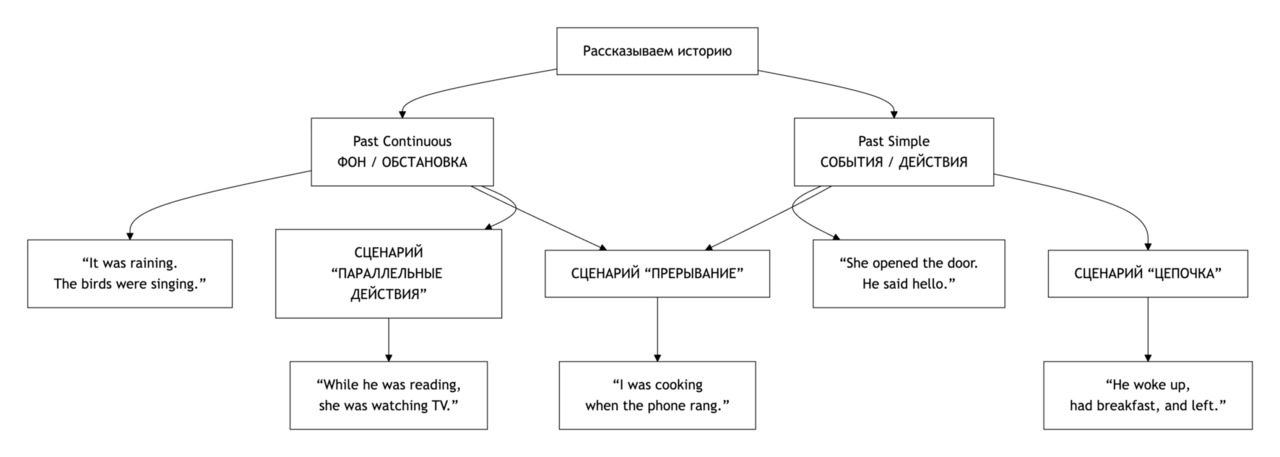
Past Simple используется для:
завершённых действий в прошлом;
последовательных событий;
действий, произошедших в конкретное время.
Формула:
Subject + verb (2nd form / -ed)
Examples:
She finished the report yesterday. — Она закончила отчёт вчера.
They met their clients last week. — Они встретились с клиентами на прошлой неделе.
Past Continuous используется для:
действий, которые были в процессе в определённый момент в прошлом;
фоновых действий в истории;
описания ситуации, во время которой произошло другое действие.
Формула:
Subject + was / were + verb + -ing
Examples:
He was working late that evening. — Он работал допоздна в тот вечер.
They were discussing the plan when the manager arrived. — Они обсуждали план, когда пришёл менеджер.
Story
Last Friday, Anna stayed late at the office. She was preparing a presentation for an important meeting, and the building was becoming quiet. While she was reviewing the final slides, the lights suddenly went off.
At that moment, Anna was sitting alone in the conference room. She felt surprised but stayed calm. She checked her phone and realized that it was already after nine. The security team was checking the building while she was packing her laptop.
A few minutes later, the lights came back on. Anna finished her work quickly and decided to leave. As she was walking to the parking area, she was thinking about the long day and the effort she had made. She knew the presentation was important, and she felt satisfied with the result.
The next morning, Anna presented her work to the team. Everyone listened carefully, and the meeting went well. Looking back, she understood that working late was challenging, but it helped her feel more confident and prepared.
Useful Words and Expressions
to stay late — задерживаться допоздна
to prepare a presentation — готовить презентацию
while — в то время как
suddenly — внезапно
at that moment — в тот момент
to feel surprised — чувствовать удивление
to stay calm — сохранять спокойствие
to realize — осознавать
security team — служба безопасности
to pack a laptop — собирать ноутбук
a few minutes later — несколько минут спустя
to come back on — снова включаться
to look back — оглядываться назад
effort — усилие
to feel satisfied — чувствовать удовлетворение
to feel confident — чувствовать уверенность
Exercises
Exercise 1. Fill in the blanks
Anna ___ (prepare) a presentation when the lights went off.
She ___ (stay) calm and checked her phone.
The security team ___ (check) the building while Anna was leaving.
The next morning, she ___ (present) her work to the team.
Exercise 2. Choose the correct option
Anna worked / was working late when the lights went off.
She packed / was packing her laptop while the security team checked the building.
The meeting went / was going well the next morning.
Exercise 3. Answer the questions
What were you doing the last time you stayed late at work or school?
Did anything unexpected happen while you were working recently?
How did you feel during that situation?
What helped you stay focused at that moment?
Looking back, what did you learn from that experience?
Answer Key
Exercise 1
was preparing
stayed
was checking
presented
Exercise 2
was working
was packing
went
Exercise 3 (sample answers)
I was finishing an important task when I stayed late at work. It required extra concentration and time.
Yes, something unexpected happened while I was working on a project. It changed my original plan.
I felt slightly stressed at first, but later I became more confident. The situation helped me stay alert.
Clear priorities helped me stay focused at that moment. I concentrated on completing one task at a time.
Looking back, I learned how to manage pressure better. The experience improved my confidence.
Mini Tips
Используй Past Continuous, чтобы описать фон и атмосферу в истории.
Past Simple помогает показать, что именно произошло и в какой последовательности.
Сочетание этих времён делает повествование более живым и логичным.
Present Perfect vs Past Simple
Grammar Focus
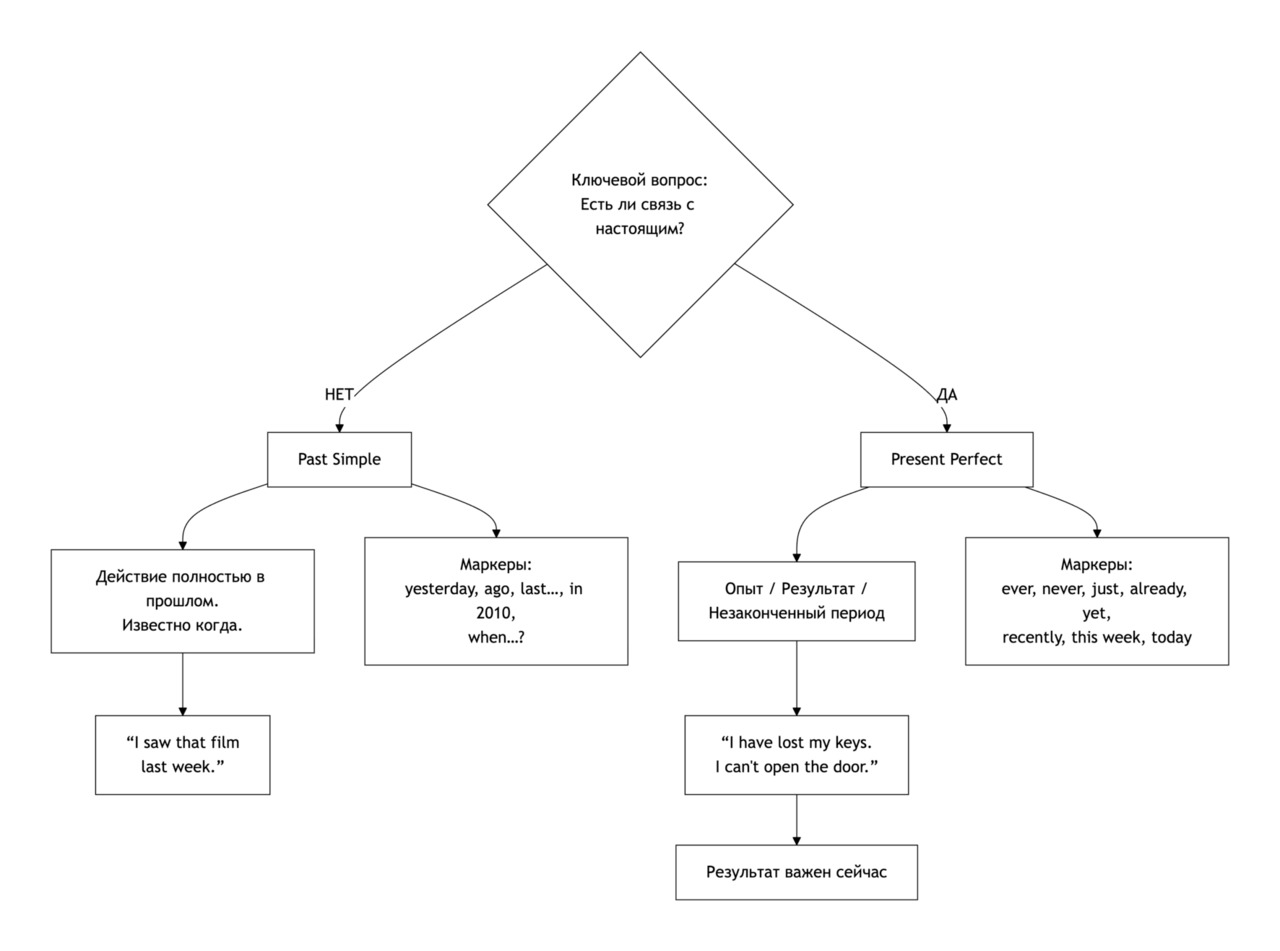
Present Perfect используется для:
действий в прошлом, результат которых важен сейчас;
жизненного опыта без указания конкретного времени;
ситуаций, начавшихся в прошлом и имеющих связь с настоящим.
Формула:
Subject + have / has + past participle (V3)
Examples:
I have completed the report. — Я закончил отчёт (результат важен сейчас).
She has worked in this company for five years. — Она работает в этой компании пять лет.
Past Simple используется для:
завершённых действий в прошлом;
событий, произошедших в конкретное время;
ситуаций, не связанных с настоящим моментом.
Формула:
Subject + verb (2nd form / -ed)
Examples:
I completed the report yesterday. — Я закончил отчёт вчера.
She worked in this company ten years ago. — Она работала в этой компании десять лет назад.
Story
Daniel has changed his career several times in his life. He has worked in marketing, finance, and customer support. These experiences have helped him understand what he really wants from his professional life.
Five years ago, Daniel moved to another city and started a new job. At that time, he felt uncertain, but he quickly adapted to the new environment. He learned new skills and built strong professional relationships. Over the years, he has gained confidence and clarity.
Recently, Daniel has received an offer from an international company. He has already discussed the details with his family and considered the long-term benefits. Last week, he met the company’s representatives and asked important questions about the role.
So far, Daniel has not made a final decision. He understands that every career move affects his future. Looking back at his experience, he sees how each step has prepared him for the present moment.
Useful Words and Expressions
to change a career — менять карьеру
several times — несколько раз
professional life — профессиональная жизнь
to move to another city — переезжать в другой город
at that time — в то время
to adapt quickly — быстро адаптироваться
over the years — за эти годы
to gain confidence — обрести уверенность
recently — недавно
to receive an offer — получить предложение
so far — до настоящего момента
to make a decision — принять решение
long-term benefits — долгосрочные преимущества
to affect the future — влиять на будущее
to prepare for — готовить к
Exercises
Exercise 1. Fill in the blanks
Daniel ___ (work) in several fields during his career.
He ___ (move) to another city five years ago.
Recently, he ___ (receive) an offer from an international company.
Last week, he ___ (meet) the company’s representatives.
Exercise 2. Choose the correct option
Daniel has changed / changed his career several times.
He has started / started a new job five years ago.
So far, he has not made / did not make a final decision.
Exercise 3. Answer the questions
Have you ever changed your career or field of study?
What important decisions have you made in your life so far?
Did you move or change something important in your life in the past?
Have you recently learned any useful skills?
Looking back, how has your past experience prepared you for your present life?
Answer Key
Exercise 1
has worked
moved
has received
met
Exercise 2
has changed
started
has not made
Exercise 3 (sample answers)
Yes, I have changed my field of study once in my life. It helped me understand my interests better.
I have made several important decisions so far, including career-related choices. They have influenced my personal growth.
Yes, I moved to another city in the past. That experience changed my lifestyle significantly.
Yes, I have recently learned useful skills related to my profession. They are helpful in my daily work.
My past experience has prepared me for my present life by teaching me responsibility and flexibility. It has shaped my current goals.
Mini Tips
Если важен результат сейчас или опыт — используй Present Perfect.
Если есть конкретное время в прошлом, выбирай Past Simple.
Слова so far, recently, ever, over the years часто сочетаются с Present Perfect.
Future Forms: Plans, Decisions, Predictions
Grammar Focus
В английском языке существует несколько форм будущего времени, которые используются в зависимости от значения высказывания.
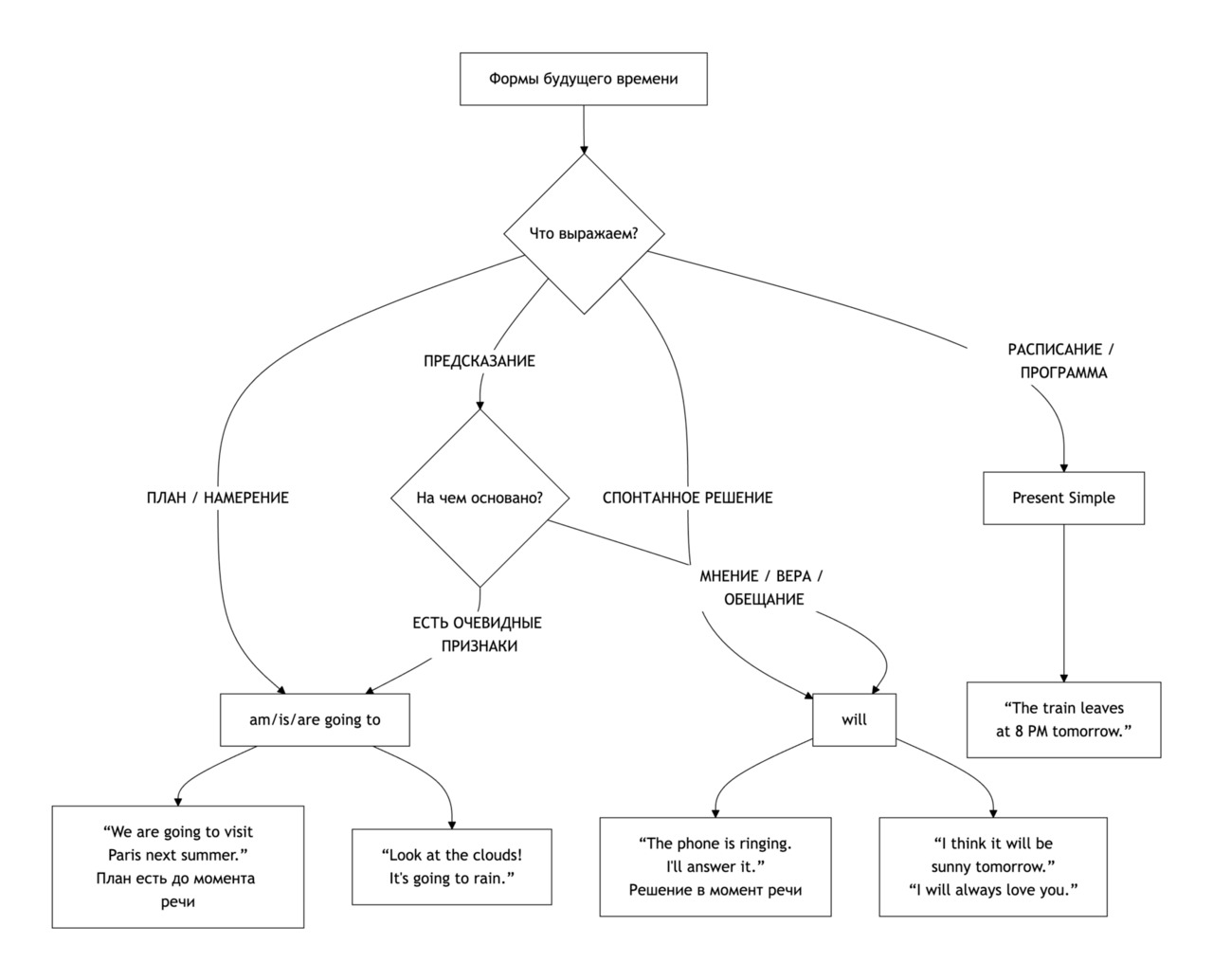
Going to используется для:
заранее принятых планов и намерений;
прогнозов, основанных на текущей ситуации или очевидных признаках.
Формула:
Subject + am / is / are + going to + base verb
Examples:
I am going to start a new course next month. — Я собираюсь начать новый курс в следующем месяце.
Look at the sky. It is going to rain. — Посмотри на небо. Сейчас пойдёт дождь.
Will используется для:
решений, принятых в момент речи;
обещаний и предложений;
прогнозов, основанных на личном мнении.
Формула:
Subject + will + base verb
Examples:
I will help you with this task. — Я помогу тебе с этим заданием.
I think the meeting will take longer than expected. — Думаю, встреча займёт больше времени, чем ожидалось.
Present Continuous используется для:
чётко организованных планов на ближайшее будущее;
договорённостей и назначенных событий.
Examples:
I am meeting my manager tomorrow. — Я встречаюсь с руководителем завтра.
We are leaving for a business trip next week. — Мы уезжаем в командировку на следующей неделе.
Story
Emma is planning several important changes in her life. Next month, she is starting a new position at a larger company. She has already discussed the details with her manager, and everything is arranged.
Emma is also going to move to a new apartment. She believes this change will improve her daily routine and help her focus better. Right now, she is making a list of tasks, because there is a lot to prepare.
While she is thinking about the future, Emma receives a call from a colleague. He needs help with a report, and Emma agrees immediately. She says she will send the necessary information later in the evening.
Emma feels confident about her plans. She understands that not everything will be easy, but she believes the changes are going to bring positive results. Looking ahead, she is ready to take responsibility and move forward.
Useful Words and Expressions
to plan changes — планировать изменения
next month — в следующем месяце
to start a position — приступить к должности
to discuss details — обсуждать детали
to be arranged — быть организованным
to move to a new apartment — переезжать в новую квартиру
to improve a routine — улучшать рутину
to focus better — лучше концентрироваться
to make a list — составлять список
to receive a call — получать звонок
to agree immediately — сразу соглашаться
to send information — отправлять информацию
later in the evening — позже вечером
to feel confident — чувствовать уверенность
to bring positive results — приносить положительные результаты
Exercises
Exercise 1. Fill in the blanks
Emma ___ (start) a new position next month.
She ___ (move) to a new apartment soon.
I think these changes ___ (bring) positive results.
She just decided and says she ___ (help) her colleague.
Exercise 2. Choose the correct option
Emma is starting / will start a new position next month.
She is going to move / will move to a new apartment (the plan is already made).
I think the changes are going to / will improve her routine.
Exercise 3. Answer the questions
Are you planning any important changes in your life?
What are you going to do in the next few months?
Do you usually make decisions quickly, or do you think first?
What plans have you already arranged for the near future?
How do you think your life will change in the next year?
Answer Key
Exercise 1
is starting
is going to move
will bring
will help
Exercise 2
is starting
is going to move
will
Exercise 3 (sample answers)
Yes, I am planning several important changes in my life. They are related to my work and personal development.
In the next few months, I am going to focus on improving my professional skills. I have already set clear goals.
I usually think carefully before making decisions. This helps me avoid unnecessary mistakes.
I have already arranged several plans for the near future, including work-related activities. They are clearly scheduled.
I think my life will change gradually over the next year. These changes will help me become more organized and confident.
Mini Tips
Present Continuous — когда план уже назначен.
Going to — когда есть намерение или очевидный прогноз.
Will — для спонтанных решений и мнений о будущем.
Question Forms and Short Answers
Grammar Focus
Вопросительные формы помогают уточнять информацию и строить диалог.
1. Общие вопросы (Yes/No questions)
Используются для получения короткого ответа «да» или «нет».
Времена: все, с помощью вспомогательных глаголов (do/does, did, will, have/has).
Формула (Present Simple):
Do / Does + subject + verb?
Examples:
Do you work from home? — Ты работаешь из дома?
Does she like coffee? — Она любит кофе?
Формула (Past Simple):
Did + subject + base verb
Example:
Did you finish the report yesterday? — Ты закончил отчёт вчера?
Формула (Future):
Will + subject + base verb?
Example:
Will you attend the meeting tomorrow? — Ты пойдёшь на встречу завтра?
2. Специальные вопросы (Wh-questions)
Используются, когда нужен развернутый ответ.
Начинаются с: What, Where, When, Who, Why, How.
Examples:
Where do you usually work? — Где ты обычно работаешь?
What did you do last weekend? — Что ты делал на прошлых выходных?
3. Краткие ответы (Short answers)
Используются после yes/no questions.
Строятся по формуле: Yes/No + вспомогательный глагол + подлежащее.
Examples:
Do you work from home? — Yes, I do. / No, I don’t.
Did she finish the task? — Yes, she did. / No, she didn’t.
Story
Tom is an office manager in a busy company. Every morning, he asks himself several questions to plan his day. Does he have enough time for all tasks? Yes, he usually does. Did he finish the reports yesterday? Yes, he did. Will he attend the meeting this afternoon? No, he won’t — he has another appointment.
Tom often asks his colleagues questions as well. What are the priorities for today? Where is the new client meeting? How can we improve the workflow? Everyone gives short answers, which helps Tom organize the schedule efficiently.
Yesterday, Tom asked a new team member: «Do you need any help with your tasks?» The answer was short and polite: «Yes, thank you.» Today, he asked another colleague, «Will you join the project discussion?» The answer was: «No, I won’t. I have another task.» Tom appreciates clear questions and short answers because they save time and prevent misunderstandings.
In general, Tom’s workday runs smoothly thanks to effective questioning. He believes that asking questions and listening carefully to short answers is one of the best ways to manage a busy office.
Useful Words and Expressions
to ask a question — задавать вопрос
usually — обычно
to plan a day — планировать день
enough time — достаточно времени
task — задача
yesterday — вчера
this afternoon — сегодня днем
appointment — встреча / назначение
priority — приоритет
workflow — рабочий процесс
colleague — коллега
polite answer — вежливый ответ
to organize a schedule — организовать расписание
to join a discussion — присоединиться к обсуждению
clear question — чёткий вопрос
to prevent misunderstandings — предотвращать недопонимания
Exercises
Exercise 1. Fill in the blanks
Did Tom ___ (finish) the reports yesterday?
Will he ___ (attend) the meeting this afternoon?
Does he usually ___ (ask) his colleagues questions?
What ___ (help) the new team member?
Exercise 2. Choose the correct option
Do you / Are you plan your day in the morning?
Will he / Does he attend the project discussion today?
Did they / Do they finish all tasks yesterday?
Exercise 3. Answer the questions
Do you usually ask questions at work or school?
Did you finish all your tasks yesterday?
Will you attend any meetings or events today?
Who do you usually ask for help when needed?
How do short answers help in your daily routine?
Answer Key
Exercise 1
finish
attend
ask
helped
Exercise 2
Do you
Will he
Did they
Exercise 3 (sample answers)
Yes, I usually ask questions when I need clarification or instructions.
Yes, I finished all my tasks yesterday. It was a productive day.
Yes, I will attend an online meeting this afternoon. I prepared all the documents.
I usually ask my colleagues or friends for help when I face difficulties.
Short answers help save time and make communication clear and efficient.
Mini Tips
Yes/No questions всегда можно отвечать кратко: Yes, I do / No, I don’t.
Wh-questions требуют развёрнутого ответа, часто несколько предложений.
Использование коротких ответов экономит время и делает общение ясным.
Present Perfect Continuous
Grammar Focus
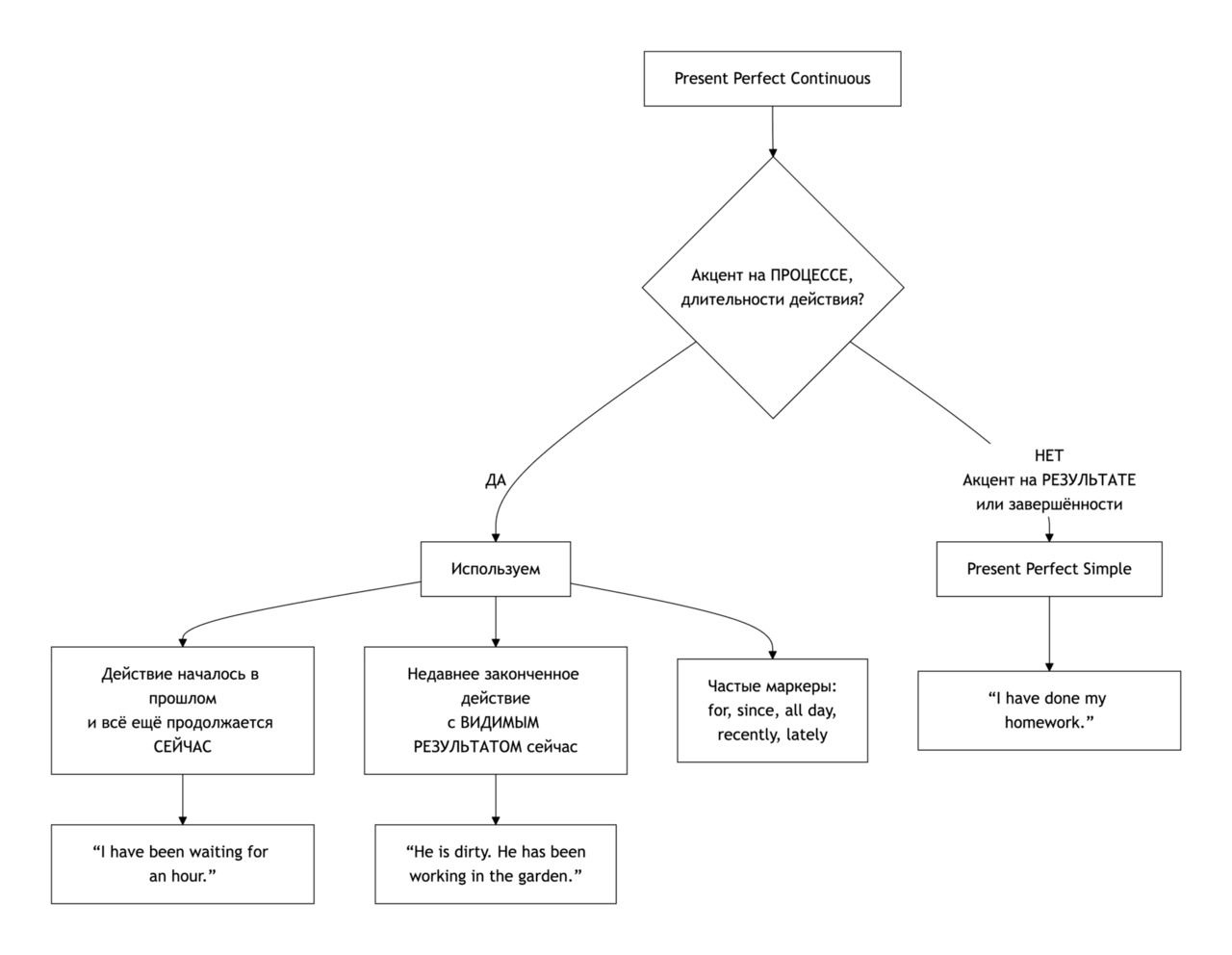
Present Perfect Continuous используется для:
Действий, которые начались в прошлом и продолжаются до настоящего момента.
Действий, которые только что закончились, но важен их результат или длительность.
Акцента на процессе действия, а не на результате.
Формула:
Subject + have / has + been + verb + -ing
Examples:
I have been working here for three years. — Я работаю здесь уже три года.
She has been reading that book all morning. — Она читает эту книгу всё утро.
Слова-маркеры, которые часто используются:
for, since, all morning/day/week, lately, recently
Сравнение с Present Perfect:
Present Perfect: акцент на результате. I have finished the report.
Present Perfect Continuous: акцент на процессе. I have been working on the report for two hours.
Story
Sophie has been preparing for an important presentation all week. She has been researching the market, analyzing data, and writing slides. Her colleagues have noticed her dedication and hard work.
Since Monday, Sophie has been arriving at the office earlier than usual. She has been checking emails and making notes before the official meetings start. The team has been watching her progress closely because the presentation is crucial for the company’s new project.
This morning, Sophie has been reviewing the slides again. She has been thinking about how to explain complex ideas clearly and simply. While she has been doing this, her manager has been giving her some helpful advice. Sophie feels more confident because she has been practicing her speech and preparing carefully.
By the end of the week, Sophie will deliver the presentation. She believes that all her effort and time spent preparing will pay off. Looking back, she can see how much she has improved since the beginning of the project.
Useful Words and Expressions
to prepare for a presentation — готовиться к презентации
all week — всю неделю
to research the market — исследовать рынок
analyzing data — анализировать данные
slides — слайды
dedication — усердие, преданность
arriving earlier — приходить раньше
to check emails — проверять почту
making notes — делать заметки
official meeting — официальное совещание
crucial — решающий, важный
to review slides — проверять слайды
to explain clearly — объяснять ясно
helpful advice — полезный совет
to feel confident — чувствовать уверенность
to deliver a presentation — проводить презентацию
Exercises
Exercise 1. Fill in the blanks
Sophie ___ (prepare) for the presentation all week.
She ___ (research) the market and analyzing data.
Her manager ___ (give) some helpful advice while she was reviewing slides.
She feels confident because she ___ (practice) her speech carefully.
Exercise 2. Choose the correct option
I have been working / worked here for five years.
She has been reading / read this book all morning.
They have been watching / watched Sophie’s progress closely.
Exercise 3. Answer the questions
What tasks have you been working on recently?
Have you been learning any new skills this month?
How long have you been studying English?
Has anyone been helping you with your projects lately?
What have you been doing to improve your daily routine?
Answer Key
Exercise 1
has been preparing
has been researching
has been giving
has been practicing
Exercise 2
have been working
has been reading
have been watching
Exercise 3 (sample answers)
I have been working on a report for my company this week. It requires attention to detail.
Yes, I have been learning how to use a new software program. It is challenging but useful.
I have been studying English for three years. I practice every day to improve.
Yes, my colleague has been helping me with some tasks recently. It makes my work easier.
I have been organizing my schedule and planning tasks to improve my daily routine.
Mini Tips
Используй Present Perfect Continuous, когда важен процесс действия и его длительность.
Маркеры времени: for, since, all morning, lately, recently.
Отличие от Present Perfect: результат vs процесс.
Past Perfect in Context
Grammar Focus
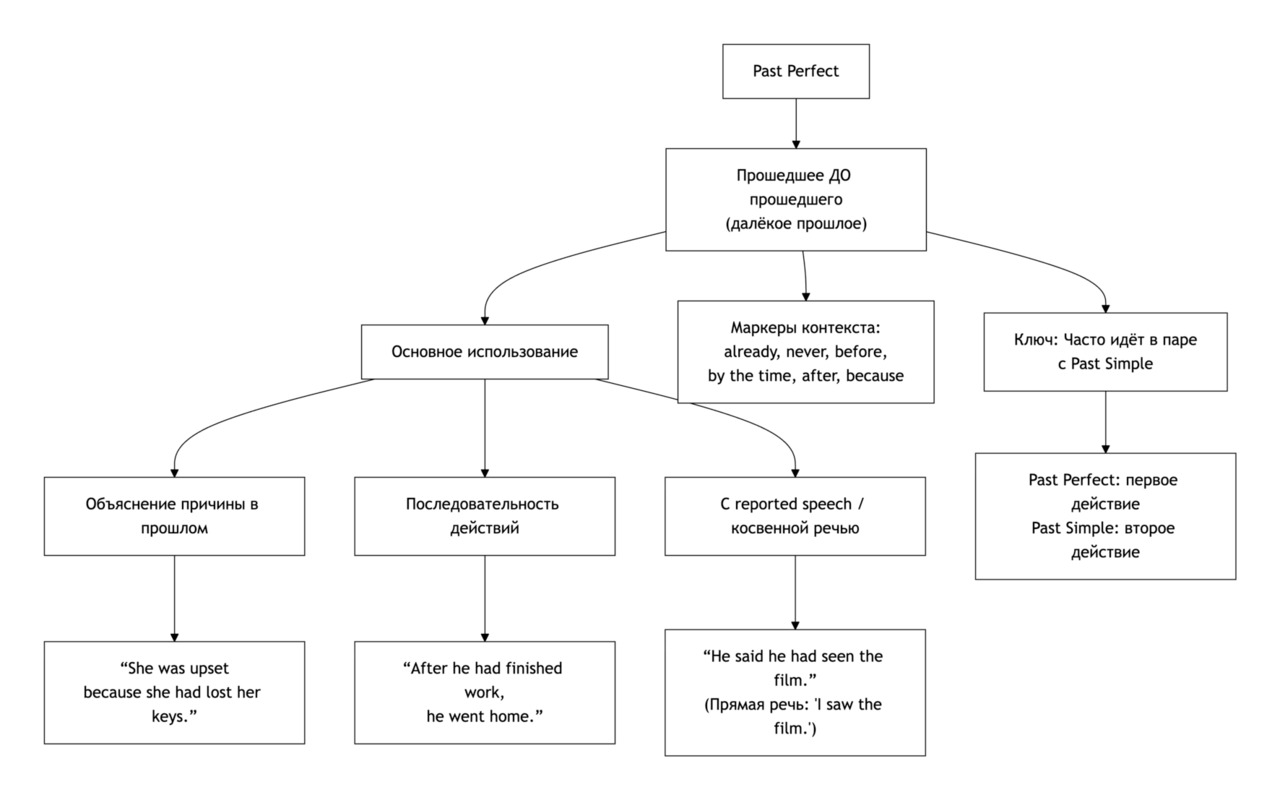
Past Perfect используется для:
Действий, которые произошли до другого события в прошлом.
Подчёркивания предшествования или завершённости действия.
Формула:
Subject + had + past participle (V3)
Examples:
She had finished the report before the meeting started. — Она закончила отчёт до начала совещания.
By the time they arrived, the manager had left. — К тому времени, как они пришли, менеджер уже ушёл.
Слова-маркеры, которые часто используются:
before, after, by the time, already, just
Сравнение с Past Simple:
Past Simple: действие произошло в прошлом. I finished the report yesterday.
Past Perfect: действие произошло раньше другого события в прошлом. I had finished the report before the meeting started.
Story
Last week, Julia had planned to finish all her tasks by Friday. She had prepared reports, scheduled meetings, and checked all emails in advance. By Thursday evening, she felt confident because she had completed almost everything.
On Friday morning, Julia arrived at the office and realized that the printer was broken. She had not printed the documents for the meeting yet. Fortunately, her colleague had already prepared extra copies, so the meeting went smoothly.
During the meeting, Julia noticed that one of the clients had changed the requirements. She had not expected this change, but she quickly adapted. By the end of the day, Julia reflected on the week. She realized that careful preparation had helped her manage unexpected situations effectively.
Looking back, Julia understood that planning ahead and completing tasks before deadlines had made her work easier. She felt proud of her achievements and ready for the challenges of the next week.
Useful Words and Expressions
to plan tasks — планировать задачи
by Friday — к пятнице
to prepare reports — готовить отчёты
to schedule meetings — назначать встречи
to check emails — проверять почту
almost everything — почти всё
fortunately — к счастью
extra copies — дополнительные копии
client — клиент
to change requirements — изменить требования
to adapt quickly — быстро адаптироваться
by the end of the day — к концу дня
to reflect on — обдумывать, подводить итоги
careful preparation — тщательная подготовка
unexpected situations — неожиданные ситуации
to feel proud — чувствовать гордость
Exercises
Exercise 1. Fill in the blanks
Julia ___ (prepare) reports and schedule meetings by Thursday.
She realized that she ___ (not print) the documents yet.
Her colleague ___ (already prepare) extra copies for the meeting.
By the end of the week, Julia ___ (understand) the importance of planning ahead.
Exercise 2. Choose the correct option
She had finished / finished the report before the meeting started.
By the time Julia arrived / had arrived, the printer had broken.
She quickly adapted because she had / has prepared well.
Exercise 3. Answer the questions
Have you ever prepared something important before a deadline?
Did you face any unexpected problems recently?
How did planning ahead help you in your work or studies?
By the end of last week, what had you completed?
How do you feel after finishing important tasks before the deadline?
Answer Key
Exercise 1
had prepared
had not printed
had already prepared
had understood
Exercise 2
had finished
arrived
had
Exercise 3 (sample answers)
Yes, I prepared a project report before the deadline. It helped me stay calm and organized.
Yes, I faced unexpected problems during the project. Careful planning made them easier to handle.
Planning ahead helped me manage my time and avoid stress. I could focus on important tasks.
By the end of last week, I had completed all my assignments and reviewed important notes.
I feel satisfied and confident after finishing tasks ahead of time. It motivates me to keep working efficiently.
Mini Tips
Past Perfect подчёркивает, что действие произошло раньше другого события в прошлом.
Слова-маркеры: before, after, by the time, already, just.
Часто используется в рассказах и описании последовательности событий.
Future Continuous and Future Perfect
Grammar Focus
В английском языке есть разные формы будущего времени, чтобы подчеркнуть процесс действия или завершённость действия к определённому моменту.
1. Future Continuous
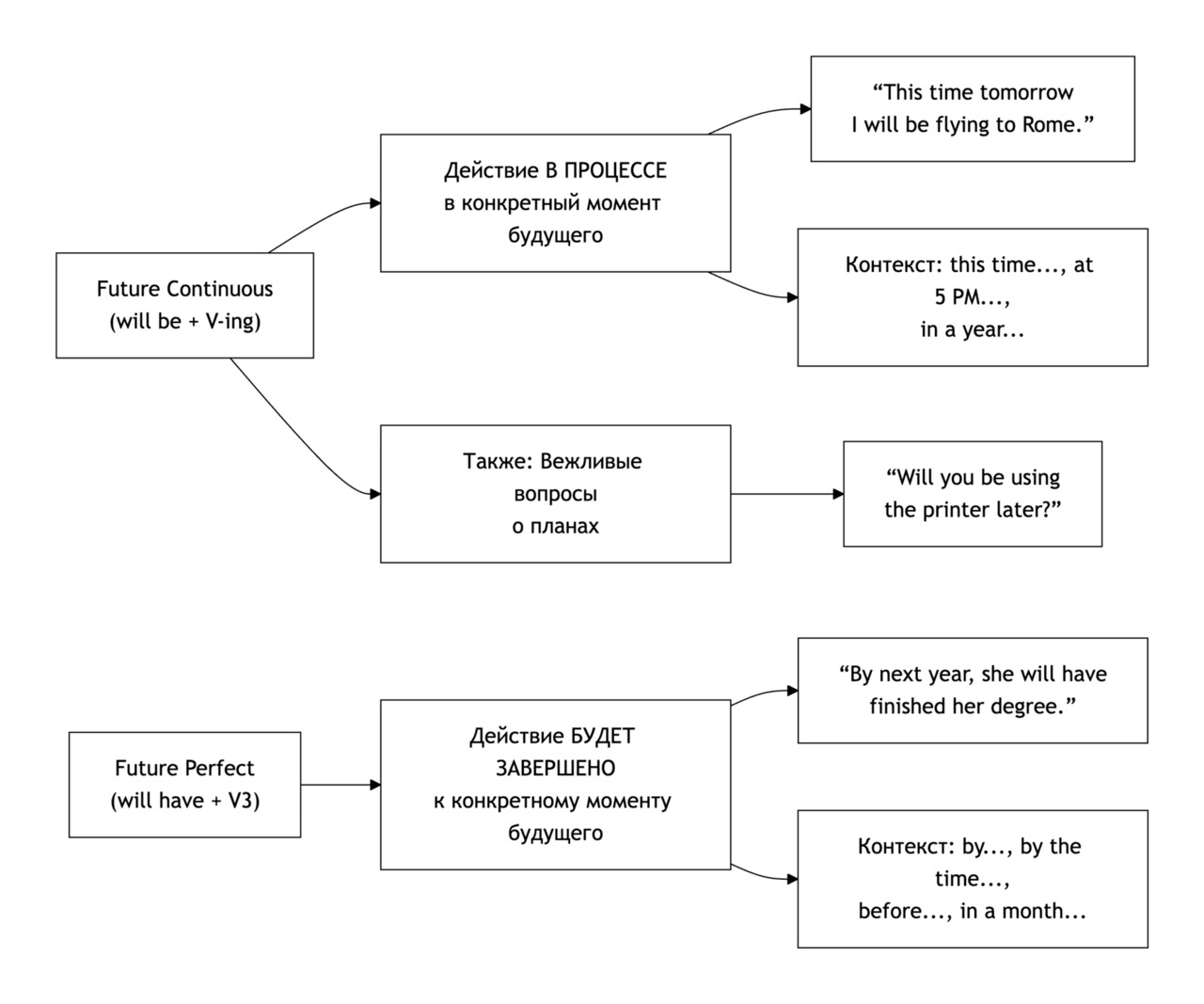
Используется для:
действий, которые будут происходить в определённый момент в будущем;
описания фона будущих событий.
Формула:
Subject + will + be + verb + -ing
Examples:
At 10 a.m. tomorrow, I will be attending a meeting. — Завтра в 10 утра я буду на встрече.
She will be working late next Friday. — Она будет работать допоздна в следующую пятницу.
Слова-маркеры: at this time tomorrow, next week, soon
2. Future Perfect
Используется для:
действий, которые будут завершены к определённому моменту в будущем;
подчеркивания результата в будущем.
Формула:
Subject + will + have + past participle (V3)
Examples:
By 5 p.m., I will have finished the report. — К 17:00 я закончу отчёт.
She will have completed all tasks by next Monday. — Она завершит все задачи к следующему понедельнику.
Слова-маркеры: by, by the time, before, already
Сравнение:
Future Continuous: процесс действия. I will be working at 9 a.m.
Future Perfect: результат действия. I will have worked for three hours by 9 a.m.
Story
Next Monday, Mark will be attending a conference in another city. At 9 a.m., he will be giving a short presentation to the participants. During the morning, he will be answering questions and discussing important topics with colleagues.
Meanwhile, his assistant will be preparing documents and checking emails at the office. By the time Mark returns in the evening, all reports will have been submitted, and the office will be ready for the next week.
Mark has already planned his schedule carefully. By 12 p.m., he will have met with three key clients. At 3 p.m., he will be joining a workshop on new technologies. He feels confident because all tasks will have been organized in advance.
Looking ahead, Mark knows that the day will be busy, but he enjoys planning and managing his responsibilities. He believes that attending the conference and completing his tasks on time will have a positive impact on his career.
Useful Words and Expressions
to attend a conference — посещать конференцию
at 9 a.m. — в 9 утра
to give a presentation — делать презентацию
participants — участники
to answer questions — отвечать на вопросы
to discuss topics — обсуждать темы
meanwhile — тем временем
to prepare documents — готовить документы
to check emails — проверять почту
by the time — к тому времени
to submit reports — сдавать отчёты
workshop — семинар
new technologies — новые технологии
to plan a schedule — планировать расписание
to manage responsibilities — управлять обязанностями
to have a positive impact — оказывать положительное влияние
Exercises
Exercise 1. Fill in the blanks
At 9 a.m., Mark ___ (give) a presentation.
By 5 p.m., all reports ___ (submit).
During the morning, he ___ (answer) questions and discuss topics.
By 12 p.m., he ___ (meet) with three key clients.
Exercise 2. Choose the correct option
Tomorrow at 10 a.m., I will be / will have attending the meeting.
By next Monday, she will be / will have completed all tasks.
At this time tomorrow, we will be / will have working on the project.
Exercise 3. Answer the questions
What will you be doing at this time tomorrow?
By the end of the week, what will you have completed?
Have you ever planned your tasks carefully for a busy day?
Who will be helping you with your responsibilities in the near future?
How do you feel when you complete tasks on time?
Answer Key
Exercise 1
will be giving
will have been submitted
will be answering
will have met
Exercise 2
will be
will have
will be
Exercise 3 (sample answers)
Tomorrow at this time, I will be working on a report for my company.
By the end of the week, I will have completed all my assignments and checked emails.
Yes, I have planned my tasks carefully. It helps me manage time efficiently.
My colleagues will be helping me with some tasks next week. It makes work easier.
I feel satisfied and confident when I complete tasks on time. It motivates me to stay organized.
Mini Tips
Future Continuous = процесс действия в будущем.
Future Perfect = результат, завершение действия к конкретному моменту.
Маркеры: at this time tomorrow, by, by the time, before.
Time Expressions and Verb Tenses
Grammar Focus
Time expressions помогают понять, какое время использовать в предложении. Разные маркеры часто связаны с определёнными временами:
1. Present Simple
Маркеры: always, usually, often, sometimes, never, every day/week/year
Example:
I usually wake up at 7 a.m. — Я обычно встаю в 7 утра.
2. Present Continuous
Маркеры: now, at the moment, today, this week, currently
Example:
She is studying English at the moment. — Она сейчас учит английский.
3. Present Perfect
Маркеры: already, just, yet, ever, never, so far, recently
Example:
I have just finished my homework. — Я только что закончил домашнее задание.
4. Present Perfect Continuous
Маркеры: for, since, all morning/day/week, lately, recently
Example:
We have been working on this project all week. — Мы работаем над этим проектом всю неделю.
5. Past Simple
Маркеры: yesterday, last week/year, ago, in 2010, when I was a child
Example:
I visited Paris last summer. — Я посетил Париж прошлым летом.
6. Past Continuous
Маркеры: while, when, as, at that moment
Example:
I was reading a book when the phone rang. — Я читал книгу, когда зазвонил телефон.
7. Past Perfect
Маркеры: before, after, by the time, already, just
Example:
She had left before I arrived. — Она ушла до того, как я пришёл.
8. Future Forms
Will: in the future, tomorrow, next week, I think, probably
Going to: soon, in a few days, already planned, looks like
Future Continuous: at this time tomorrow, next week, soon
Future Perfect: by, by the time, before, already
Example:
By 6 p.m., I will have finished my work. — К 18:00 я закончу работу.
Совет: Сначала определяй временной маркер, затем подбирай время для глагола.
Story
Olivia keeps a detailed planner to manage her daily life. She usually wakes up at 6:30 a.m. and has breakfast before starting work. At the moment, she is reading emails from clients. She has already replied to urgent messages and has just prepared a report for her manager.
This week, Olivia has been working on a large project. Since Monday, she has been analyzing data and discussing solutions with her team. Yesterday, she attended a meeting where new deadlines were assigned. By the time she left the office, she had completed most of her tasks.
Next week, she will be traveling to another city for a conference. By Friday, she will have presented her project results to key stakeholders. Olivia feels confident because careful planning and understanding of time expressions help her stay organized and productive.
Useful Words and Expressions
daily planner — ежедневник
usually — обычно
at the moment — в данный момент
urgent messages — срочные сообщения
report — отчёт
since Monday — с понедельника
large project — крупный проект
deadlines — сроки
by the time — к тому времени
key stakeholders — ключевые участники
traveling — путешествовать
conference — конференция
to stay organized — оставаться организованным
productive — продуктивный
careful planning — тщательное планирование
Exercises
Exercise 1. Fill in the blanks
Olivia usually ___ (wake up) at 6:30 a.m.
She ___ (read) emails at the moment.
Since Monday, she ___ (work) on a large project.
By Friday, she ___ (present) her project results.
Exercise 2. Choose the correct option
I have been / did working on this task all week.
By the time he arrived / had arrived, the meeting started.
She is / has been checking emails at the moment.
Exercise 3. Answer the questions
What do you usually do in the morning?
Have you recently worked on a big project?
What were you doing yesterday at this time?
What tasks will you complete by the end of the week?
How do time expressions help you choose the correct verb tense?
Answer Key
Exercise 1
wakes up
is reading
has been working
will have presented
Exercise 2
have been
arrived
is
Exercise 3 (sample answers)
I usually have breakfast and check my emails in the morning.
Yes, I have recently worked on a school project that required research and analysis.
Yesterday at this time, I was reading a book at home.
By the end of the week, I will have completed all my assignments and reviewed my notes.
Time expressions indicate whether the action is ongoing, completed, or planned, helping me choose the correct tense.
Mini Tips
Сначала ищи временной маркер — он почти всегда определяет время глагола.
Маркеры делятся на категории: настоящее, прошлое, будущее, длительное, завершённое.
Используй таблицу маркеров и времен для быстрого выбора глагольной формы.
Narrative Tenses Review
Grammar Focus
Narrative tenses — это времена, которые обычно используются для рассказа о событиях в прошлом. Они помогают правильно передавать последовательность действий и оттенки времени.
1. Past Simple
Действия, которые произошли и завершились в прошлом.
Маркеры: yesterday, last week, in 2010, ago
Example:
I visited London last summer. — Я посетил Лондон прошлым летом.
2. Past Continuous
Действия, которые происходили в определённый момент в прошлом, часто для создания фона.
Маркеры: while, when, as, at that moment
Example:
I was reading a book when the phone rang. — Я читал книгу, когда зазвонил телефон.
3. Past Perfect
Действия, которые произошли до другого события в прошлом.
Маркеры: before, after, by the time, already, just
Example:
She had finished the report before the meeting started. — Она закончила отчёт до начала совещания.
4. Past Perfect Continuous
Действия, которые длились до определённого момента в прошлом, с акцентом на процесс.
Маркеры: for, since, all day, all week
Example:
I had been working all day before he called. — Я работал весь день, прежде чем он позвонил.
Совет:
Past Perfect / Past Perfect Continuous помогают показать последовательность событий.
Past Simple / Past Continuous описывают основное действие и фон.
Story
Last Saturday, Anna had planned to spend a quiet day at home. She had already cleaned the apartment and done the laundry before 10 a.m. At 10:30, she was reading a new book when her friend called. They decided to meet at a café in the city.
While Anna was walking to the café, it started to rain. She had forgotten her umbrella at home, so she got completely wet. By the time she arrived, her friend had already ordered coffee and some pastries. They spent the morning talking about work, hobbies, and recent travels.
After the meeting, Anna returned home. She realized that careful planning in the morning had helped her manage her day effectively, even though unexpected events occurred. She had been looking forward to a relaxing day, but the combination of preparation and spontaneity made the day enjoyable and memorable.
Useful Words and Expressions
to plan a day — планировать день
quiet day — спокойный день
to clean the apartment — убирать квартиру
laundry — стирка
to read a book — читать книгу
while — пока
to call — звонить
café — кафе
to walk — идти пешком
rain — дождь
umbrella — зонт
to spend the morning — проводить утро
recent travels — недавние поездки
careful planning — тщательное планирование
unexpected events — неожиданные события
enjoyable — приятный
memorable — запоминающийся
Exercises
Exercise 1. Fill in the blanks
Anna ___ (clean) the apartment before 10 a.m.
She ___ (read) a book when her friend called.
By the time she arrived at the café, her friend ___ (order) coffee.
She ___ (look forward) to a relaxing day all morning.
Exercise 2. Choose the correct option
I was / had been walking to the park when it started to rain.
By the time she left / had left, the meeting had finished.
While Anna was reading / had read a book, the phone rang.
Exercise 3. Answer the questions
Have you ever planned a day in advance? What did you plan?
Describe a situation when something unexpected happened.
How do you usually spend your weekends?
Have you ever been caught in the rain? What did you do?
Do you prefer careful planning or spontaneous actions? Why?
Answer Key
Exercise 1
had cleaned
was reading
had ordered
had been looking forward
Exercise 2
was
had left
was reading
Exercise 3 (sample answers)
Yes, I planned my last weekend. I decided to visit a museum and meet friends.
Once, my train was delayed, but I managed to arrive on time for the meeting.
I usually spend my weekends relaxing, reading books, and going for walks.
Yes, I was caught in the rain last week. I ran home quickly and changed clothes.
I prefer careful planning because it helps me avoid stress and manage my time.
Mini Tips
Past Simple = основное действие в прошлом
Past Continuous = фон или длительное действие
Past Perfect = действие, которое произошло до другого события
Past Perfect Continuous = длительное действие до события, акцент на процессе
Ability and Possibility: Can, Could, Be Able To
Grammar Focus
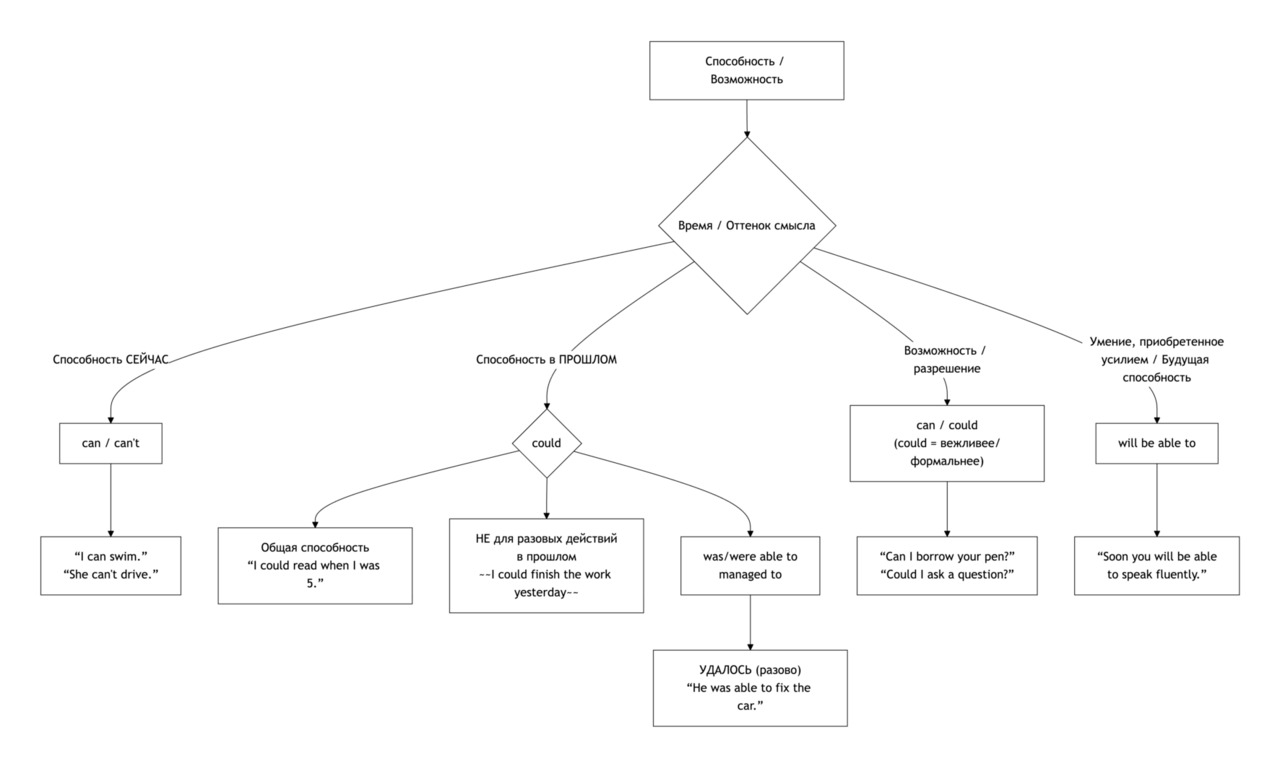
Can, Could, and Be Able To используются для выражения способности и возможности.
1. Can — способность или возможность в настоящем и будущем.
Form: can + base verb
Examples:
I can speak English. — Я могу говорить по-английски.
She can help you tomorrow. — Она сможет помочь тебе завтра.
2. Could — способность или возможность в прошлом или вежливая просьба.
Form: could + base verb
Examples:
I could swim very well when I was a child. — Я очень хорошо умел плавать в детстве.
Could you open the window, please? — Можешь открыть окно, пожалуйста?
3. Be able to — используется вместо can в различных временах, особенно в прошедшем и будущем.
Form: be (am/is/are/was/were) + able to + base verb
Examples:
I was able to finish the project on time. — Мне удалось закончить проект вовремя.
She will be able to attend the meeting next week. — Она сможет присутствовать на встрече на следующей неделе.
Совет:
Can — настоящее/будущее; Could — прошедшее/вежливая просьба; Be able to — любые времена.
Используй be able to, если нужно подчеркнуть, что кто-то сумел сделать что-то в прошлом или будущем.
Story
Last summer, Alex decided to learn how to play the guitar. At first, he could only play simple chords, but he practiced every day. By the end of the month, he was able to play several songs.
Alex’s friend Emma can play the piano very well. She often helps him with difficult melodies and gives useful advice. Alex believes that with enough practice, he will be able to play a full concert next year.
Last week, they visited a music school. The teacher asked Alex if he could perform a short piece for the class. Alex was nervous, but he was able to play it successfully. Everyone applauded, and Alex felt proud of his progress.
Emma reminded him that learning an instrument requires patience. She can see how much Alex has improved. Next summer, they will be able to perform together at a small local festival.
Useful Words and Expressions
to learn an instrument — учиться играть на инструменте
at first — сначала
simple chords — простые аккорды
practice every day — практиковаться каждый день
by the end of the month — к концу месяца
to play songs — играть песни
to help — помогать
difficult melodies — сложные мелодии
useful advice — полезный совет
full concert — полноценный концерт
to be nervous — быть нервным
to perform — выступать
everyone applauded — все аплодировали
proud of progress — гордиться прогрессом
patience — терпение
local festival — местный фестиваль
Exercises
Exercise 1. Fill in the blanks
At first, Alex ___ (play) only simple chords.
By the end of the month, he ___ (play) several songs.
Last week, he ___ (perform) a short piece for the class.
Next year, he ___ (play) a full concert.
Exercise 2. Choose the correct option
I can / could speak French when I was a child.
She will be able to / can finish the task tomorrow.
They were able to / can solve the problem quickly.
Exercise 3. Answer the questions
What skills can you do well now?
Could you do something as a child that you can’t do now?
What will you be able to do after practicing a new skill?
Who can help you when you learn something new?
Do you prefer learning alone or with someone who can help? Why?
Answer Key
Exercise 1
could play
was able to play
was able to perform
will be able to play
Exercise 2
could
will be able to
were able to
Exercise 3 (sample answers)
I can speak English and use a computer well.
Yes, I could ride a bike when I was younger, but now I rarely ride.
After practicing, I will be able to play the guitar or cook new recipes.
My teacher, friend, or family can help me when I learn something new.
I prefer learning with someone who can help because it is easier and faster.
Mini Tips
Can = способность/возможность сейчас или в будущем
Could = способность в прошлом или вежливая просьба
Be able to = любое время, особенно для прошедшего и будущего
Акцентируй success in action с be able to: I was able to solve it
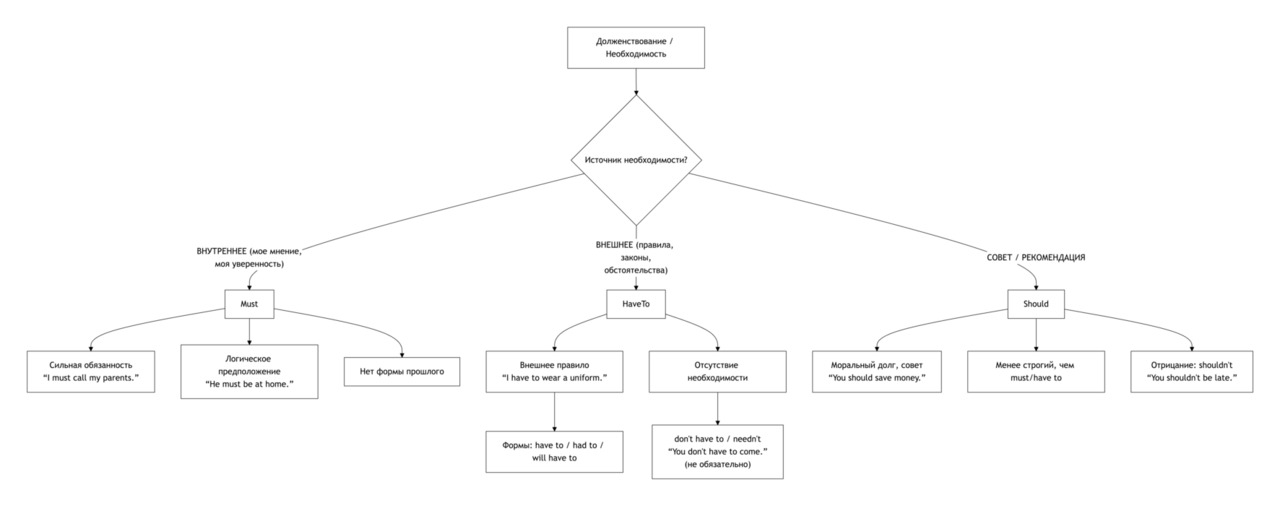
Obligation and Necessity: Must, Have To, Should
Grammar Focus
Must, Have To, and Should используются для выражения обязанности, необходимости или совета.
1. Must — сильная обязанность, правило, необходимость.
Form: must + base verb
Examples:
You must wear a helmet when riding a bike. — Ты должен носить шлем при езде на велосипеде.
Students must submit their homework on time. — Студенты должны сдавать домашнее задание вовремя.
2. Have To — внешняя обязанность или необходимость, часто связана с правилами или обстоятельствами.
Form: have/has to + base verb
Examples:
I have to finish this report before Friday. — Я должен закончить отчёт до пятницы.
She has to attend the meeting tomorrow. — Она должна присутствовать на встрече завтра.
3. Should — совет, рекомендация, пожелание.
Form: should + base verb
Examples:
You should drink more water. — Тебе следует пить больше воды.
They should check the schedule before leaving. — Им следует проверить расписание перед выходом.
Совет:
Must = внутреннее убеждение или строгие правила.
Have to = внешняя необходимость или требования.
Should = мягкий совет или рекомендация.
Story
Last Monday, Daniel had a busy day. He knew he must attend an important meeting at 10 a.m., because it was crucial for his project. Before leaving, he realized he had to finish a report that his manager requested. Daniel worked quickly, completing it just in time.
During lunch, Daniel remembered that he should eat something healthy instead of skipping the meal. He chose a salad and some fruit, following the advice of his doctor. After lunch, he had to call a client to discuss new requirements, and he must submit the updated documents by the end of the day.
By the evening, Daniel reflected on his day. He realized that following rules and advice helped him manage responsibilities effectively. Even though it was stressful, he knew that being organized and responsible made his work more productive and successful. Tomorrow, he should plan his schedule carefully again to avoid last-minute stress.
Useful Words and Expressions
busy day — занятый день
must — должен, необходимо
important meeting — важная встреча
crucial — решающий, важный
finish a report — закончить отчёт
manager — менеджер
should — следует, рекомендуется
healthy meal — здоровая еда
skip a meal — пропускать приём пищи
salad — салат
fruit — фрукты
client — клиент
requirements — требования
updated documents — обновлённые документы
responsibilities — обязанности
productive — продуктивный
plan schedule — планировать расписание
last-minute stress — стресс в последнюю минуту
Exercises
Exercise 1. Fill in the blanks
Daniel ___ (attend) an important meeting at 10 a.m.
He ___ (finish) the report requested by his manager.
During lunch, he ___ (eat) something healthy.
By the end of the day, he ___ (submit) the updated documents.
Exercise 2. Choose the correct option
You must / should wear a seatbelt while driving.
I have to / must call my teacher tomorrow.
They should / have to check their emails regularly.
Exercise 3. Answer the questions
When do you have to follow strict rules at school or work?
Can you give an example of something you must do every day?
Бесплатный фрагмент закончился.
Купите книгу, чтобы продолжить чтение.