
Бесплатный фрагмент - Bulimia: 1-Month Self-Care CBT Workbook
Disclaimer
This material is provided for informational and educational purposes only. It is not intended to serve as a substitute for professional medical advice, diagnosis, or treatment. Always seek the advice of a qualified healthcare provider with any questions regarding a medical condition.
P.S. Please excuse any minor linguistic inaccuracies, as English is not the author’s primary language.
How to utilize the Workbook
Engaging with this workbook involves a structured self-help approach. The objective is to gain insight into your internal processes, reorganize your thought patterns, and transform harmful behavioral habits.
You may select any format that suits you best: complete the workbook digitally or maintain a conventional paper journal. The success of the practice relies not on the medium, but on consistency and thoughtful, analytical self-reflection.
Key operational principles:
• Daily Practice: Dedicate 15–20 minutes each day to these activities. Regularly documenting your observations, thoughts, and conclusions aids in monitoring your progress and strengthening new cognitive skills.
• Externalization and Real-Time Documentation: By noting automatic thoughts immediately after a trigger occurs, you create distance from them. This process converts subjective experiences into objects for objective evaluation.
• Objectivity and Analysis: Describe scenarios from an external viewpoint (focusing solely on the facts), recognize cognitive distortions (such as catastrophizing), and consistently conclude by seeking an adaptive alternative.
The core element of the work is the Situation-Thought-Emotion-Reaction (S-T-E-R) protocol. It enables you to clearly observe the relationship between external occurrences and your internal interpretations.
Keep a pace that feels comfortable for you, bearing in mind that the primary goal of the workbook is to assist you in your journey toward greater self-awareness and fostering more harmonious reactions.
Week 1: Comprehending Eating Behavior
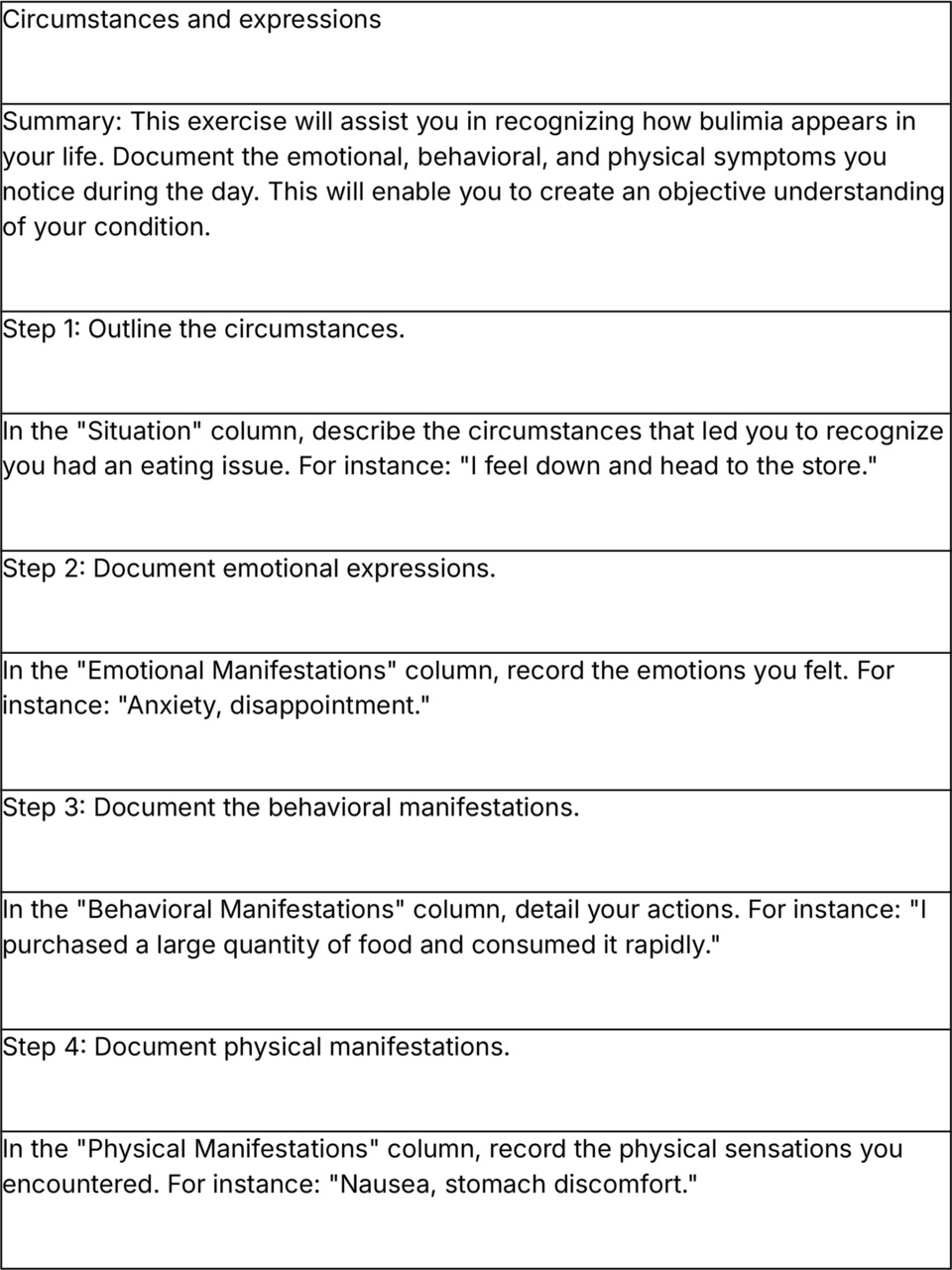
Day 1: Understanding bulimia: An examination of the emotional, behavioral, and physical aspects of the disorder
Today marks the beginning of your journey toward understanding bulimia. You will explore the emotional, behavioral, and physical aspects of the disorder. This represents the initial and most crucial step in breaking the cycle.
Bulimia extends beyond being merely an eating disorder. It represents a multifaceted psychological condition where binge eating and compensatory behaviors serve as the primary means of coping with negative emotions. Individuals experiencing this disorder often feel adrift and powerless when confronted with their feelings, leading them to use food as a method of emotional numbing.
Overeating and compensatory behaviors can present themselves in various forms:
Binge eating involves an individual consuming excessive quantities of food within a brief timeframe, leading to a sensation of losing control.
Compensatory behavior. Following episodes of overeating, an individual often experiences feelings of guilt and shame, prompting attempts to “purge” the consumed food. This can manifest in various forms, such as vomiting, engaging in excessive exercise, or utilizing laxatives.
Emotional expressions. An individual may experience feelings of depression, anxiety, fear, guilt, shame, and isolation.
Physical symptoms. An individual may experience gastrointestinal issues, dental caries, and hair thinning.
Understanding that bulimia is not “your fault,” but rather a condition with its own causes and manifestations, is the initial step toward managing it.
Practical activities
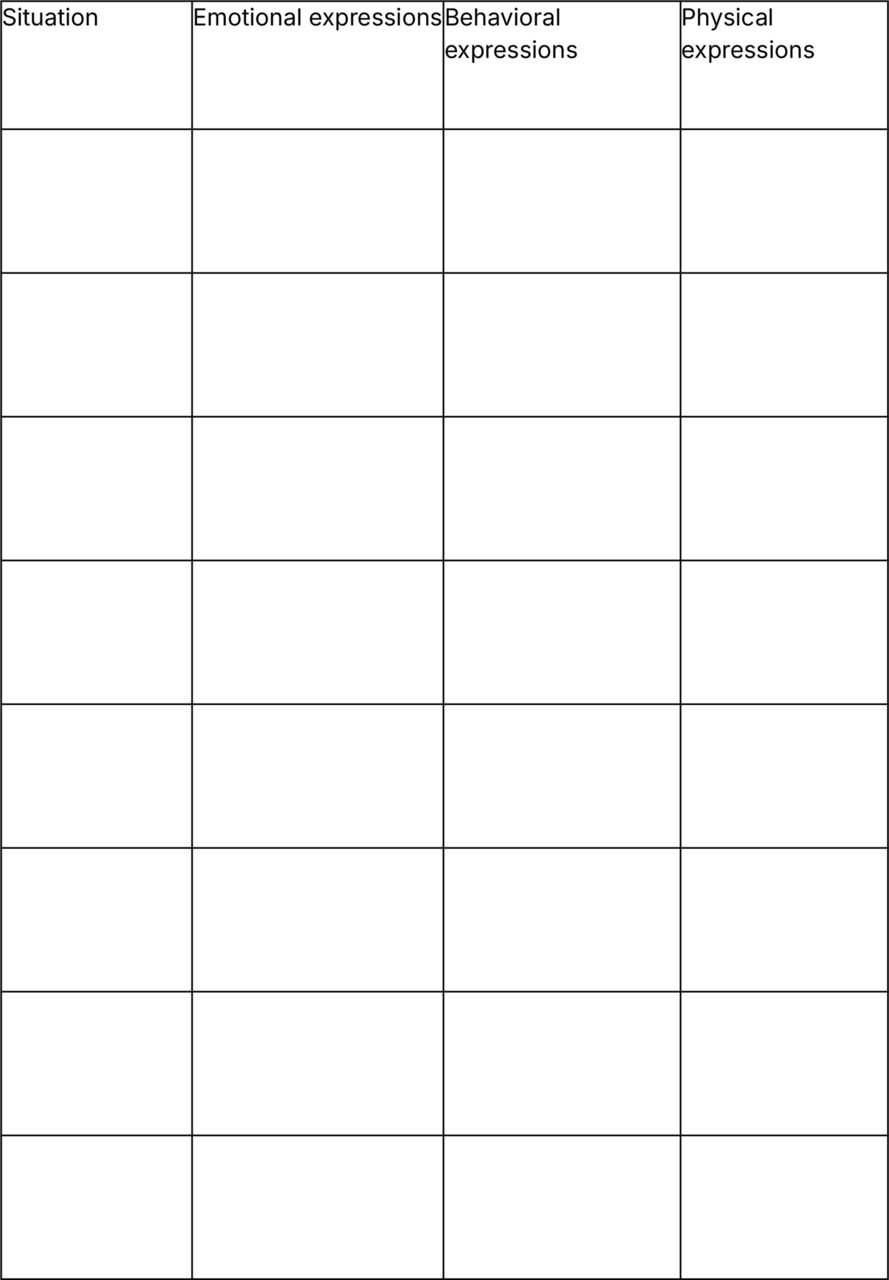
Day 2: The Bulimia Cycle. Exploring how rigid dieting, binge eating, and compensatory actions form a harmful cycle
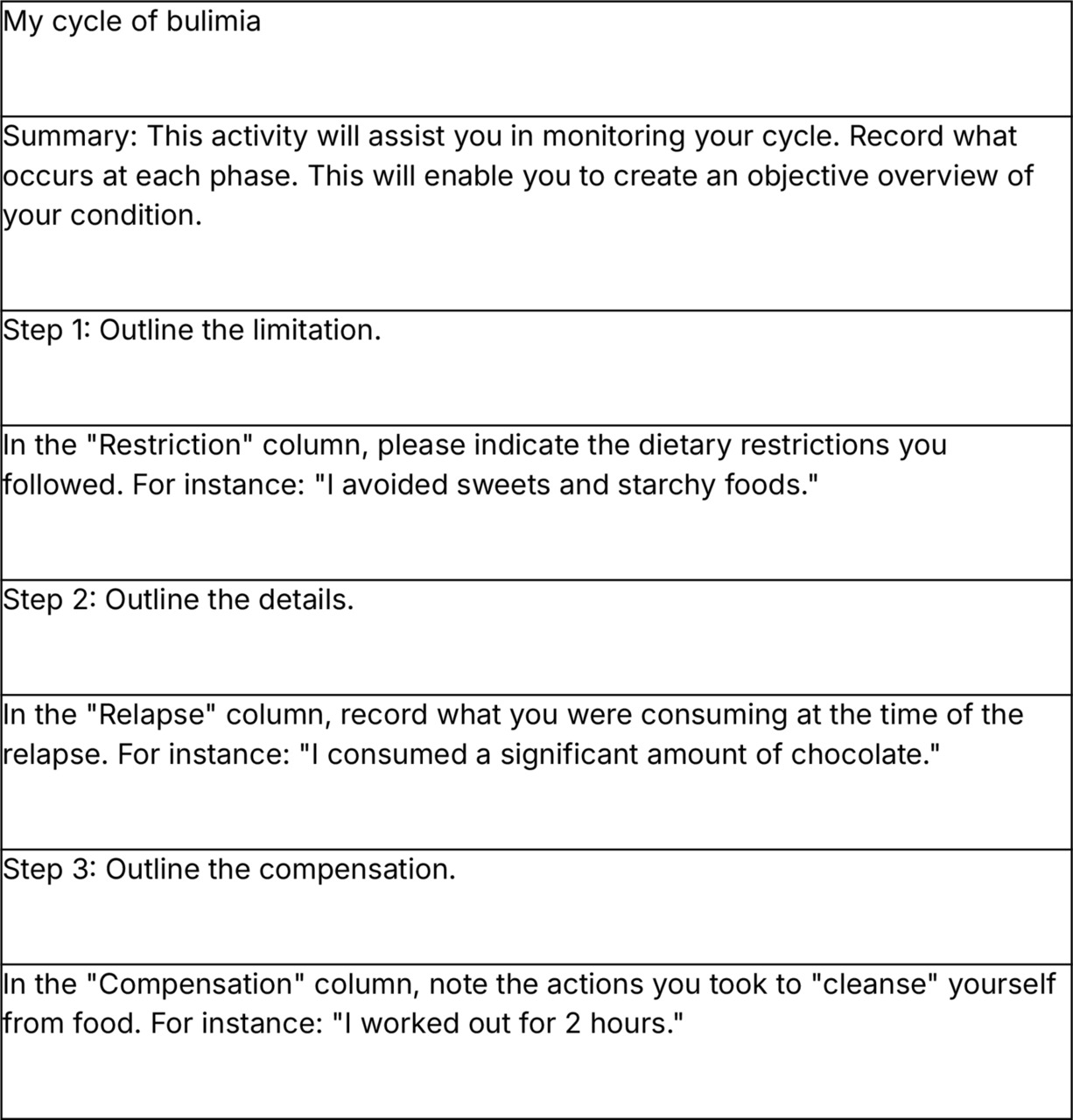
Today, you will examine how rigid diets, episodes of binge eating, and compensatory actions form a harmful cycle. Grasping this cycle is essential for overcoming it.
Bulimia is more than a collection of symptoms; it is a complex and harmful cycle that comprises three primary stages: restriction, relapse, and compensation.
Restriction. It begins with rigid diets and dietary limitations. An individual feels compelled to achieve perfection in self-control. They start tallying calories, steering clear of specific foods, and depriving themselves of nourishment. This results in both physiological and psychological fatigue.
Relapse. A relapse occurs when the body and mind can no longer endure the imposed restrictions. The individual starts consuming all the previously forbidden items. They experience a loss of control and are overwhelmed by feelings of guilt, shame, and disappointment.
Compensation. Following a breakdown, an individual often experiences feelings of guilt and shame, leading them to attempt to “purge” through food-related behaviors. This may involve actions such as vomiting, engaging in excessive exercise, or using laxatives. While these behaviors may offer temporary relief, they ultimately exacerbate the underlying issue.
This cycle continues to repeat endlessly, resulting in feelings of helplessness and confusion. Acknowledging this cycle is the initial step toward breaking free from it. It is essential to realize that the issue lies not within you, but within the cycle itself.
Practical activities

Day 3: My “Binge Buttons.” Recognizing personal triggers (whether emotional or situational) that lead to binge eating
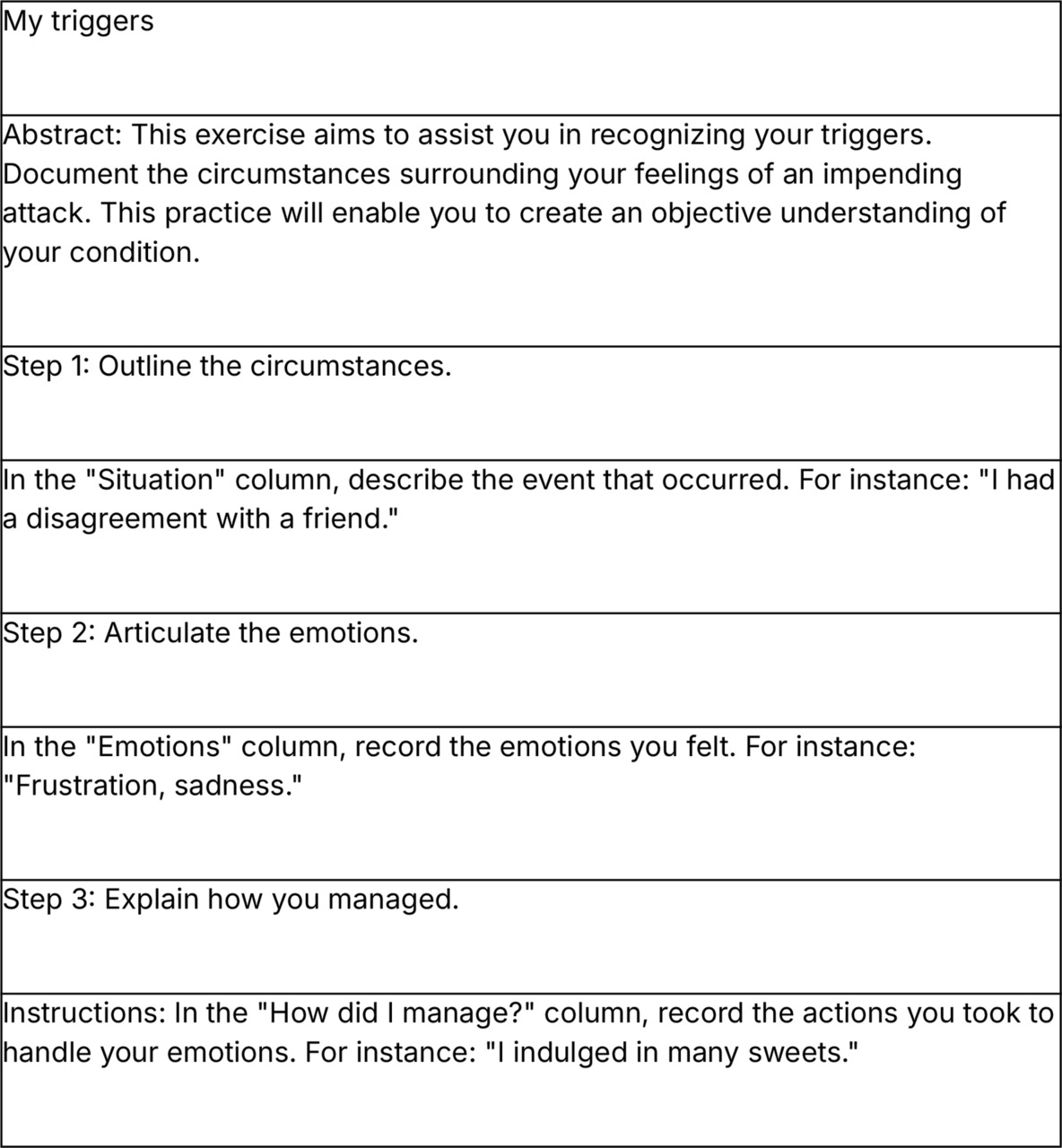
Today, you will recognize personal triggers (whether emotional or situational) that provoke your attacks. Gaining insight into your triggers is essential for developing effective coping strategies.
When experiencing bulimia, it may seem as though binge eating episodes arise unexpectedly. In reality, each individual has their own specific “binge-eating triggers” — emotional or situational factors that provoke binge eating.
Emotional triggers may be associated with your feelings, including:
Stress. When experiencing stress, you might begin to eat as a way to unwind.
Anxiety. When experiencing anxiety, you might begin to eat as a way to alleviate it.
Boredom can lead to eating as a means of entertainment.
Loneliness. When experiencing loneliness, you might seek solace in food for comfort.
Situational triggers may be associated with your surroundings, including:
Having “forbidden” foods. When you keep foods in your home that you have prohibited yourself from consuming, you may find yourself eating them.
Social settings. When attending a gathering or dining out, you might experience pressure to consume more food than you desire.
Conflicts. During a disagreement with someone, you might resort to eating as a way to manage your anger.
Identifying your triggers is the initial step in developing coping strategies. It is essential to realize that the issue lies not with the food itself, but with the emotions or circumstances that provoke it.
Practical activities

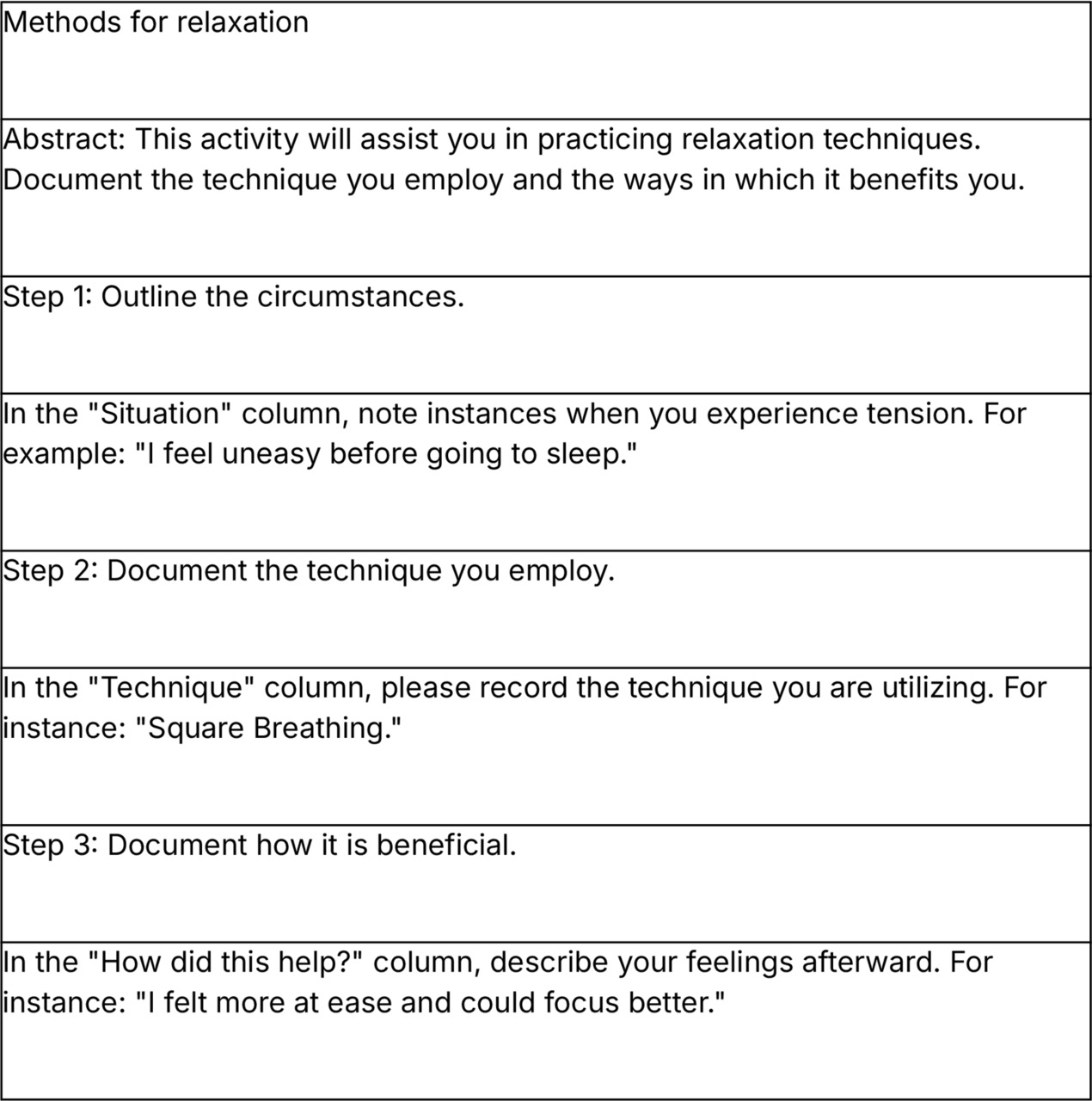
Day 4: Relaxation Techniques. We will explore breathing exercises and various methods to alleviate emotional tension and stress
Today, you will engage in breathing exercises and various techniques aimed at alleviating emotional tension and stress prior to bedtime.
When you sense that you are experiencing an attack, your body enters a state of hyperarousal. Your heart rate accelerates, your breathing turns shallow, and your thoughts become disordered. During these times, it is essential to allow your body and mind the opportunity to relax.
Relaxation techniques serve as a reset mechanism for the body. They assist in alleviating stress, soothing the nervous system, and restoring a more balanced condition. Among the simplest yet most effective methods are breathing exercises. By concentrating on your breath, you divert your attention from anxious thoughts and prompt your body to enter a state of relaxation.
Practice:
The 4-7-8 technique involves inhaling for a count of 4, holding the breath for a count of 7, and then exhaling for a count of 8. This process should be repeated 3—5 times. Engaging in this exercise aids in calming the nervous system.
The “square breathing” method involves inhaling for 4 counts, holding for 4 counts, exhaling for 4 counts, and holding for another 4 counts. Repeat this process several times. This technique aids in enhancing focus and promoting relaxation.
These techniques serve as a vital resource in your toolkit. Employ them whenever you sense tension rising. Over time, they will transform into a habit that enhances your ability to manage stress more efficiently.
Practical activities

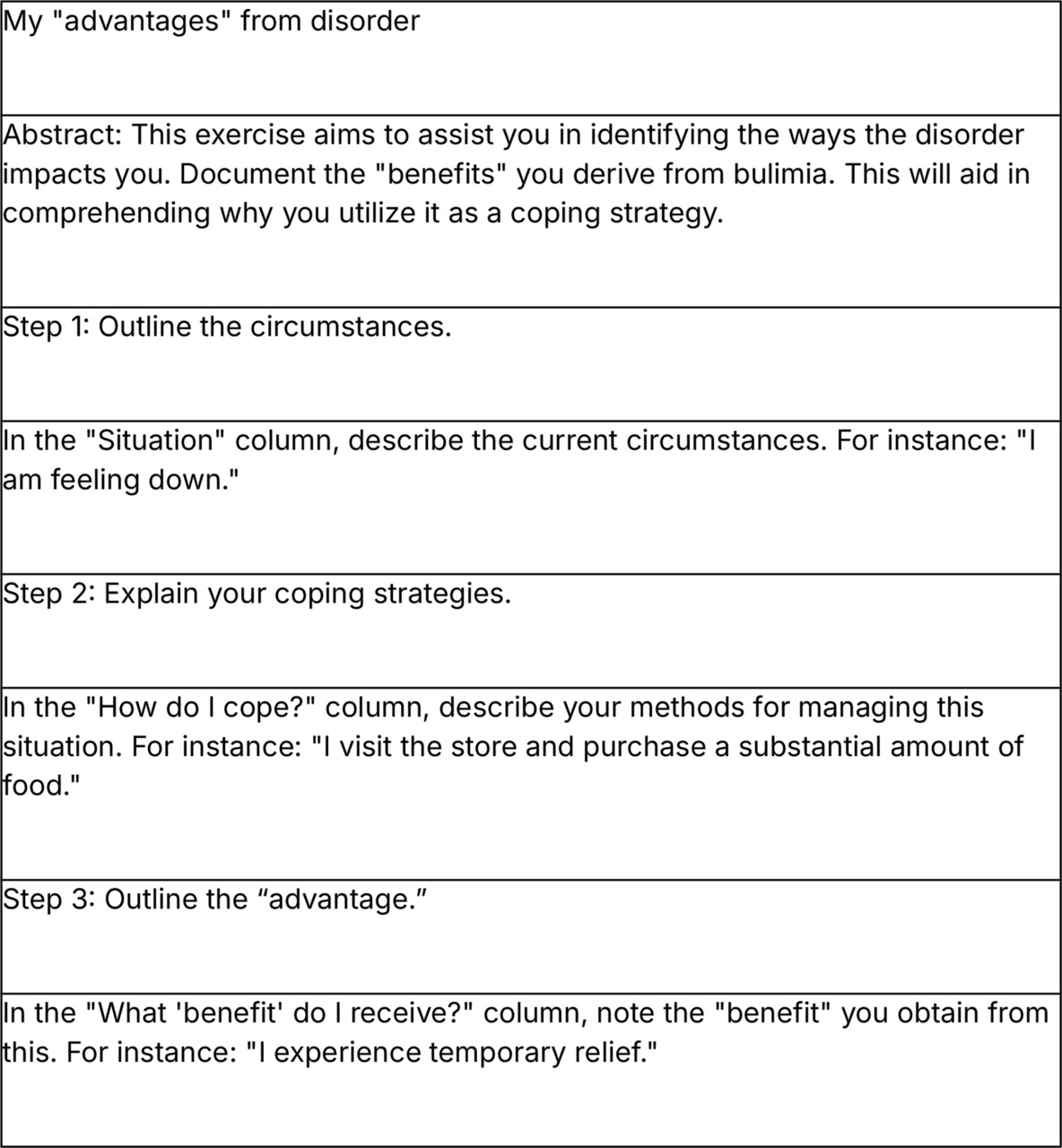
Day 5: My “advantages” from the disorder. Acknowledge how the disorder influences you
Today, you will learn how bulimia impacts you. You will identify the advantages you gain from the disorder, enabling you to cease relying on it as a coping strategy.
Bulimia is more than an eating disorder; it serves as a coping mechanism for emotions that feel overwhelming. Engaging in binge eating provides a fleeting sense of relief from pain, anxiety, or stress. Following this, compensatory behaviors can create a temporary feeling of control.
These “benefits” can be quite influential. They may create a sense that living without the disorder is impossible. However, this is a misconception. In reality, you can develop strategies to manage your emotions without turning to bulimia.
Today’s assignment is to identify the “benefits” you derive from bulimia. This will assist you in comprehending why you repeatedly revert to it. Once you realize that bulimia is not a solution, but rather a means of evading the issue, you can start to focus on addressing it.
Practical activities

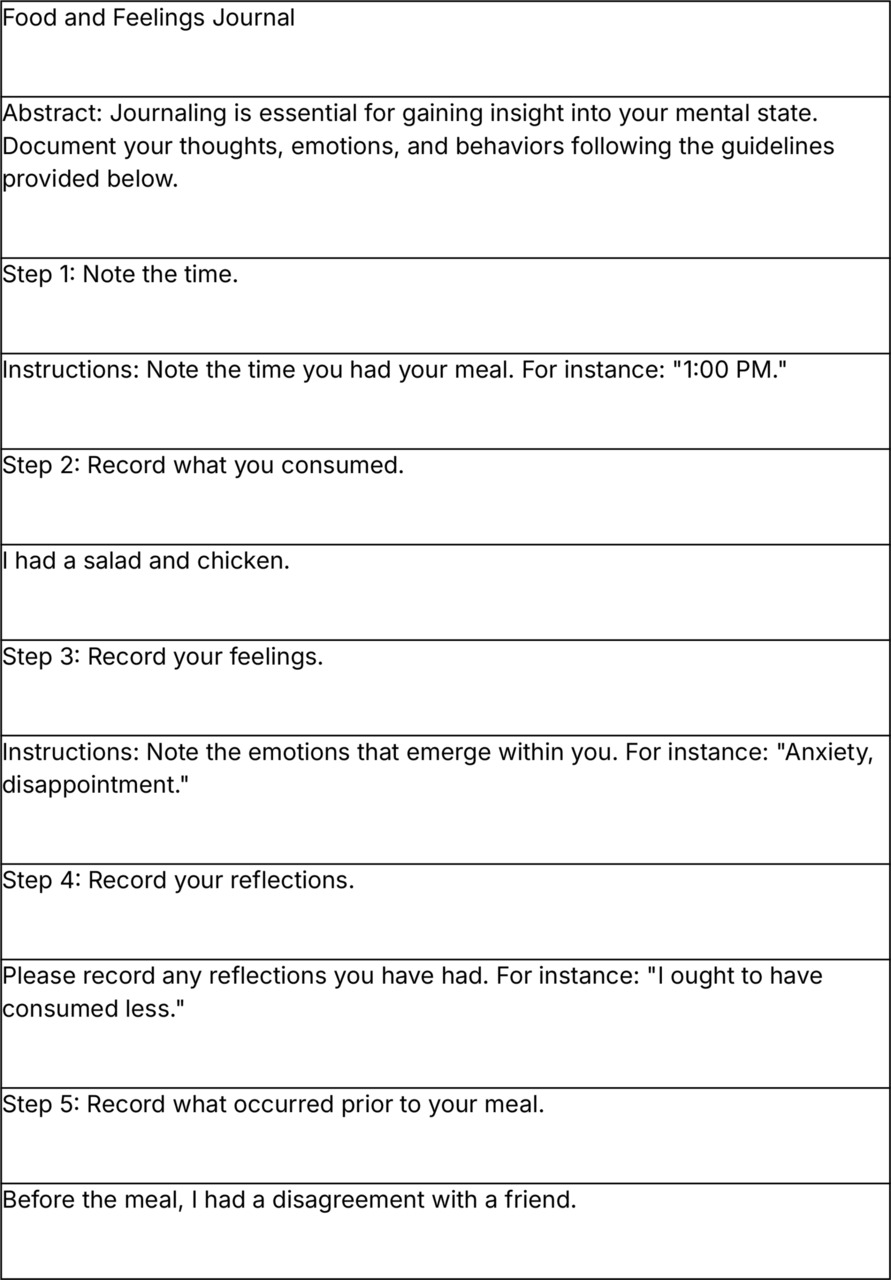
Day 6: Food and Emotions Journal. Start documenting to monitor the relationships between food, feelings, and experiences
Today, you will begin maintaining a journal to monitor the relationships between food, mood, and events. This practice will assist you in creating an objective overview of your condition, enabling you to start addressing it.
When experiencing bulimia, it may seem as though your binge eating episodes arise unexpectedly. However, they are frequently linked to your emotions, thoughts, and circumstances.
A food and emotion journal is one of the most effective tools in the battle against bulimia. It will assist you in recognizing that this isn’t always the situation. You might be surprised to discover that your binge eating episodes happen following specific events or feelings.
Maintaining a diary will assist you in recognizing patterns that you may not have previously observed. For instance, you might find that binge eating tends to happen following a disagreement.
Writing down your thoughts and feelings prior to a meal allows you to transfer them from your mind to paper. This process enables you to examine them from a distance, free from their immediate influence. Consequently, it aids in developing more effective coping strategies.
It is essential to be as truthful with yourself as you can. The more precisely and comprehensively you document, the more enlightening your conclusions will be in the future.
Practical activities

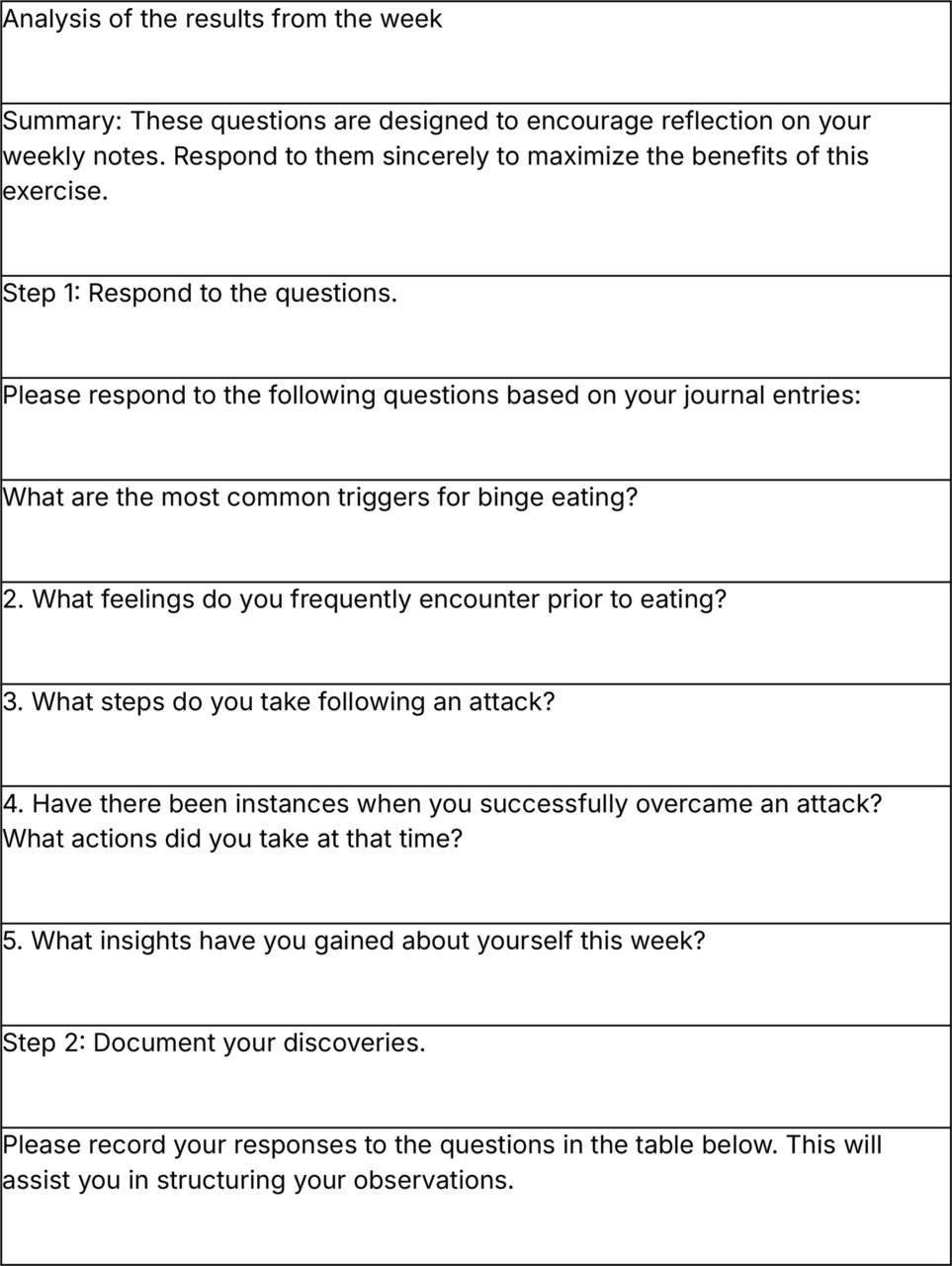
Day 7: Summary. We review the notes from the week and record our preliminary observations
Today, you will reflect on the first week. You will examine your journal entries and record your initial observations and achievements in applying the techniques. This will assist you in recognizing the progress you have already accomplished and in preparing for the next phase of developing your thinking.
The initial week focused on awareness. You acquired the ability to identify the symptoms of bulimia, examine its cycle, recognize triggers, and apply relaxation techniques. Now, as the week concludes, it is time to pause and reflect on all the notes you have taken.
Examine your diary. Identify any recurring themes. For instance, you may observe that binge eating tends to happen following specific emotions or circumstances. Additionally, you might discover that relaxation techniques assist you in managing anxiety.
Carefully observe and derive conclusions. This examination will serve as the foundation for the upcoming weeks, during which you will address the irrational thoughts and beliefs that contribute to your condition.
Practical activities
Бесплатный фрагмент закончился.
Купите книгу, чтобы продолжить чтение.